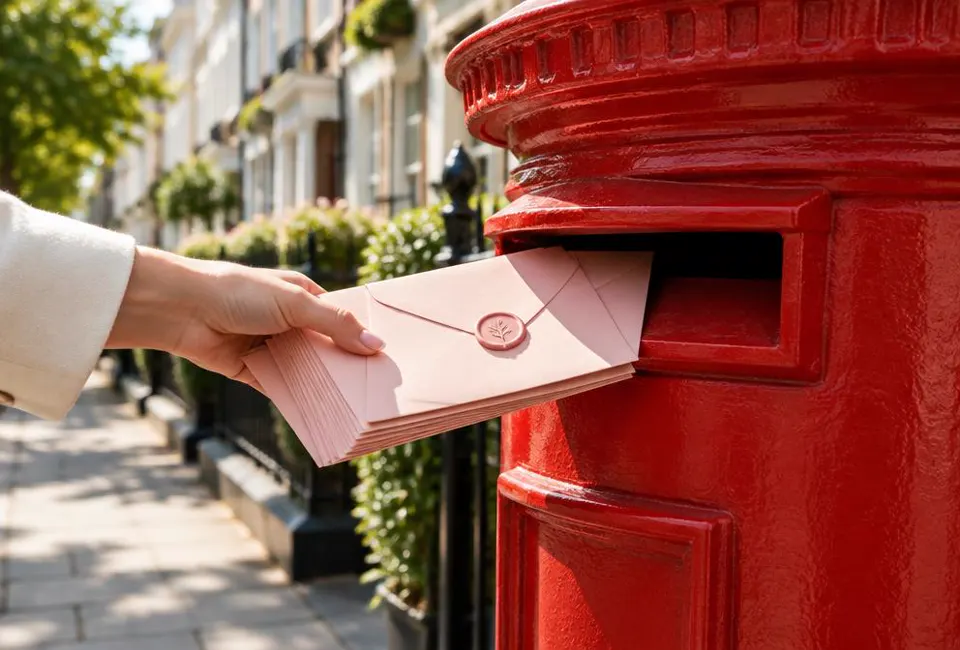
The Global Standard for Your Wedding Invitation Timeline
Every successful wedding starts with a clear communication strategy. The timeline must be built backwards from the wedding date itself, taking into account the specific needs of your venue and caterers.
The foundational wedding invitation timeline begins roughly twelve months before the ceremony. While traditional etiquette books often suggest shorter windows, modern global travel realities require more lead time. A standard timeline consists of four major phases: the announcement (Save-the-Date), the formal invitation, the RSVP window, and the final count consolidation. Each phase serves a unique purpose in the planning ecosystem. For example, the Save-the-Date allows guests to block their calendars and book flights, while the formal invitation provides the granular details like attire, specific locations, and dietary requirements.
Working Backwards from the Wedding Date
To calculate your specific dates, start with your wedding day and subtract the number of days your caterer requires for a final headcount. Typically, this is 14 to 30 days. Add an additional 7 to 10 days as a buffer for chasing late responses. This resulting date is your RSVP deadline. From that deadline, subtract another 6 to 8 weeks to determine when your invitations should arrive in guests' hands. If you are mailing physical paper, you must also factor in 1 to 2 weeks for transit time, depending on the reliability of your national postal service.
In the United Kingdom, Bridebook's 2024 reports indicated that the average planning cycle is roughly 18 to 20 months. For Australian couples, Easy Weddings data suggests that bookings for venues often happen 12 to 15 months out, necessitating earlier Save-the-Dates. If your wedding falls on a public holiday or during a peak tourism season like summer in the Mediterranean, your timeline should shift earlier by at least two months to ensure guests do not book other vacations.
| Milestone | Local Wedding | Destination Wedding |
|---|---|---|
| Save-the-Date | 6 to 8 Months Out | 10 to 12 Months Out |
| Mailing Invitations | 8 to 12 Weeks Out | 16 to 20 Weeks Out |
| RSVP Deadline | 4 to 5 Weeks Out | 8 to 10 Weeks Out |
| Final Count Due | 2 to 3 Weeks Out | 4 Weeks Out |
Save-the-Dates: Setting the First Impression
The Save-the-Date is a relatively modern addition to the wedding invitation timeline, primarily used to signal the intent of a wedding before the logistics are finalized.
A Save-the-Date is not a formal invitation. Its primary role is to inform guests of the date and the general city or region. This is particularly crucial for international guests who must monitor airfare and renew passports. In markets like North America, these are often high-production postcards with engagement photos. In many Asian cultures, this initial announcement might happen through a family phone call or a digital message rather than a printed card. The medium matters less than the clarity of the date.
Optimal Timing for Announcements
For a domestic wedding where most guests live within a few hours' drive, 6 months is the standard. However, if your guest list is spread across continents, 8 to 12 months is preferred. This allows guests to utilize annual leave and seek early-bird travel discounts. Sending these too early (more than 18 months) can lead to guests forgetting the event, while sending them too late (less than 4 months) risks them already having other commitments.
Digital vs. Physical Save-the-Dates
Digital Save-the-Dates have gained popularity globally due to their cost-effectiveness and speed. They are particularly useful for environmentally conscious couples or those with tight budgets. According to a 2023 Real Weddings Study by The Knot, while physical invitations remain the standard for the main event, digital Save-the-Dates are now common among nearly half of surveyed couples in the US. They allow for instant updates if a venue changes or a travel advisory is issued, which is a major advantage over static print.
Save-the-Date Checklist
- Confirm the date and venue booking before printing.
- Gather current physical or email addresses for all guests.
- Ensure names of both partners are clearly visible.
- Specify the city and country for travel planning.
- Include your wedding website URL if available.
- State clearly that a formal invitation will follow.
The Formal Invitation: Details and Wording
The formal invitation serves as the official legal and social record of your intent to marry. It must be clear, concise, and reflective of the event's formality.
When drafting your wedding invitation timeline, the design and production phase for physical stationery takes significant time. Custom letterpress or foil-stamping can require 4 to 8 weeks for production alone. If you are using a local printer, this might be shorter, but global shipping for specialist papers can introduce unexpected delays. You should finalize your wording at least three months before you intend to mail the cards to allow for proofreading and assembly.
What Must Be Included
Regardless of culture, every invitation requires: the names of the couple, the hosts (if traditional), the date and time, the specific venue address, and RSVP instructions. For multi-day events common in Indian or Middle Eastern weddings, a suite of cards or a multi-page digital document is often necessary to explain the different ceremonies and dress codes for each. Clarity on whether children are invited is also essential to prevent awkward conversations later.
Global Wording Variations
In the UK, it is common for parents to 'request the pleasure of your company,' whereas in many contemporary Australian or American weddings, the couple hosts themselves. If the event is strictly formal, time is usually written out in words (e.g., Four o'clock in the afternoon). For casual beach or garden weddings, numerical formats are acceptable. It is important to be culturally sensitive: for example, in many traditional Chinese invitations, the double happiness symbol is prominent and specific lunar dates may be mentioned alongside Gregorian dates.
RSVP Management: The Deadline Strategy
The RSVP is the most volatile part of the wedding invitation timeline. Managing expectations and following up is a dedicated task that requires organization.
The RSVP deadline is not a suggestion: it is a hard cutoff that allows you to finalize your logistics. Most couples set the deadline for 4 weeks before the wedding. This provides a one-week buffer to contact guests who failed to respond and one week to give the caterer the final numbers. If your wedding is a seated dinner with meal choices, your RSVP card must capture those specific preferences. Digital RSVP systems are highly efficient for this, as they can automatically tally totals in a spreadsheet.
Handling the Non-Responders
Expect that approximately 10 to 20 percent of your guests will not respond by the deadline. This is not necessarily a slight: mail gets lost, and people get busy. Plan a 'chase week' immediately following your deadline. During this time, you, your partner, or close family members should reach out via phone or text. A simple script is: 'Hi [Name], we are finalizing our numbers for the caterer today and wanted to make sure you were still able to join us. Please let us know by tonight!'
The Plus-One Dilemma
To avoid confusion, the invitation should be explicitly addressed to the individuals invited. If a guest is allowed a partner, write 'and Guest.' If they are not, leave it off. If a guest RSVPs for an uninvited extra person, you must address it immediately. A polite but firm response is necessary: 'We would love to have everyone there, but due to venue capacity constraints, we can only accommodate the guests named on the invitation.'
| Guest Type | Typical Response Rate | Likely Attendance |
|---|---|---|
| Local Immediate Family | 95 to 100% | High |
| Local Friends | 80 to 90% | High |
| Out-of-State/Province | 70 to 85% | Moderate |
| International Guests | 50 to 70% | Variable |
Logistics, Shipping, and International Costs
The cost of invitations is often underestimated in the initial wedding budget. Postage and professional printing can add up quickly depending on your location.
In the United States, The Knot's 2023 data showed that couples spend an average of 500 to 800 USD on invitations and stationery. In the UK, Which? reports on Hitched survey data suggest that stationery costs can range significantly, often averaging around 300 to 500 GBP for a mid-sized wedding. These prices fluctuate based on the weight of the cardstock and the method of printing. Heavy luxury papers often require extra postage, which can double your mailing costs if you are sending hundreds of invitations.
Navigating International Postage
When mailing across borders, never assume a standard stamp will suffice. Take a fully assembled invitation to your local post office to have it weighed and measured. Square envelopes often incur surcharges in the US and Australia because they cannot be processed by automated sorting machines. For international RSVPs, it is often impractical to provide a pre-stamped return envelope, as your local stamps will not work in another country. In these cases, a digital RSVP option is highly recommended to save your guests the cost and effort of international mailing.
Working with Professional Designers
If you hire a professional stationer, they will manage the production wedding invitation timeline for you. However, you must provide your final guest list in their preferred format (usually a specific spreadsheet) to avoid errors. Be sure to order at least 10 to 15 percent more invitations than you think you need. Reordering a small batch of 5 invitations later is disproportionately expensive due to setup fees.
The Digital Invitation Revolution
Digital invitations are no longer considered a breach of etiquette for most weddings, offering unique advantages in tracking and cost.
Digital platforms allow for real-time tracking of who has opened the invitation and who has not. This removes the guesswork of wondering if a letter was lost in the mail. Many platforms also allow you to send automated reminders to those who haven't RSVP'd as the deadline approaches. This is a significant time-saver during the final weeks of planning when other tasks like seating charts and dress fittings are at their peak.
The Hybrid Invitation Model
Many modern couples choose a hybrid approach: a high-quality physical invitation sent by mail, but with an RSVP link or QR code instead of a return card. This maintains the tactile tradition of a wedding invite while utilizing the efficiency of digital data collection. It also significantly reduces paper waste and the cost of return postage and envelopes.
Accessibility for Older Guests
While younger generations are comfortable with digital-only invites, older relatives may struggle with complex websites or lack email addresses. For these guests, a small number of physical cards should be printed, or a family member should be designated to call them and record their response manually. Ensuring everyone feels included is paramount to good hosting.
Digital Invitation Success Checklist
- Test the invitation on both mobile and desktop views.
- Verify that the RSVP form correctly captures dietary needs.
- Check that all links to maps or registries are active.
- Ensure the sender email address looks professional to avoid spam filters.
- Have a backup list of guest phone numbers for manual follow-up.
Final Guest Counts and Venue Coordination
Once the RSVPs are in, the transition from guest list to floor plan begins. Accuracy here prevents wasted budget and ensures smooth service.
Your final guest count is the number you give to your venue and caterer for billing. In most contracts, once you give this number, you cannot decrease it, even if guests drop out at the last minute. This is why the buffer week in your wedding invitation timeline is so important. According to RBC Royal Bank's budgeting advice for Canadian couples, food and beverage often account for the largest portion of the budget, so an accurate count is the most effective way to control costs.
Managing Last-Minute Cancellations
Statistically, about 5 percent of confirmed guests will have an emergency or illness that prevents them from attending in the final 48 hours. Most venues will not refund these plates, but they may allow you to offer the extra meals to your vendors (photographers, band members, etc.). It is helpful to keep a 'B-list' of local friends you can invite if you receive early 'no' responses, but this must be handled delicately to ensure they do not feel like an afterthought.
Integrating the Count into the Seating Chart
As soon as a 'Yes' response arrives, add that person to a preliminary seating chart. Waiting until the RSVP deadline to start the seating chart is a recipe for extreme stress. By using the rolling data from your wedding invitation timeline, you can build the chart incrementally. This also allows you to see if you have an awkward number of guests for your table sizes (e.g., a table of 10 with only 7 people) early enough to adjust the layout.
Global Variations in Invitation Etiquette
Etiquette is not universal. Understanding the norms of your specific cultural context or that of your partner is vital for a smooth process.
In many cultures, the wedding invitation timeline is much shorter. In parts of rural India or the Philippines, invitations might be sent only 3 to 4 weeks before the event, with the expectation that the community will attend regardless. Conversely, in highly structured societies like Japan, invitations are formal documents sent exactly two months in advance, often requiring a specific type of celebratory stamp. Being aware of these expectations prevents causing unintended offense to your guests.
Religious and Holiday Conflicts
Always check for religious holidays that might affect attendance. For example, scheduling a wedding during Ramadan may impact the timing of your reception for Muslim guests, while hosting during Passover or Lent may affect the menu choices for Jewish or Christian guests. Your invitation should acknowledge these factors, perhaps by noting that Halal or Kosher options are available. This shows a level of guest care that is highly valued.
Multi-Lingual Invitations
For binational couples, a bilingual invitation is often the most respectful choice. This can be done with side-by-side translations on one card or by printing two separate versions. Ensure that the RSVP instructions are clear in both languages. If you are using a digital system, many allow guests to toggle between languages, which is a significant advantage for global families.