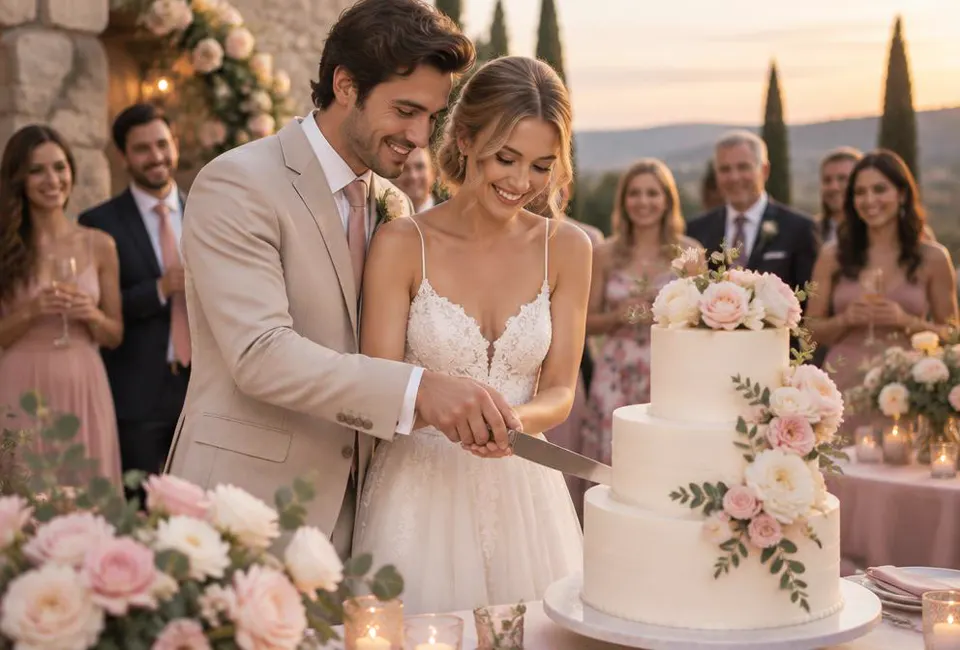
The Cocktail Hour Transition
The cocktail hour serves as the bridge between your ceremony and the formal banquet, setting the energy for the entire wedding reception order of events. Success in this phase requires balancing guest comfort with the logistical needs of your photography timeline.
The first sixty minutes following your ceremony are critical for managing guest expectations and energy levels. While guests transition to the reception space, you must navigate the primary decision framework: attending your own cocktail hour or utilizing the time for portraits. If you opted for a first look earlier in the day, you can join the festivities to greet guests immediately. However, if you followed tradition and saw each other for the first time at the altar, this hour becomes your primary window for formal family groupings and couples portraits while your guests are occupied with refreshments.
Consider the scenario of Sarah and Liam, who prioritized a traditional ceremony reveal. They used their sixty minute window strategically by providing a full open bar and live acoustic music to keep guests entertained. By pre-arranging a specific list of twenty family members to remain behind at the ceremony site, they completed all formal portraits in forty five minutes. This allowed them to spend the final fifteen minutes of the cocktail hour in a private room, sharing a quiet moment and a plate of appetizers before their grand entrance into the main ballroom.
Calculating Sustenance and Flow
Hungry guests are often restless guests, so your catering formula must be precise. The industry standard for a standard one hour transition is six pieces of appetizers per guest. If your guest list is 100 people, your kitchen should prepare 600 individual pieces. This volume ensures that even those standing far from the kitchen exit receive food. A common mistake is neglecting the beverage flow: ensure the bar is fully staffed with one bartender per fifty guests to prevent long queues that disrupt the social atmosphere and delay the start of dinner.
| Guest Count | Appetizer Total | Bartender Ratio | Service Style |
|---|---|---|---|
| 50 Guests | 300 Pieces | 1 Staff | Passed Trays |
| 100 Guests | 600 Pieces | 2 Staff | Mixed Service |
| 150 Guests | 900 Pieces | 3 Staff | Stationary + Passed |
| 200 Guests | 1200 Pieces | 4 Staff | Multiple Stations |
Globally, wedding costs reflect the significance of this transition. The Knot Real Weddings Study 2025 notes the US average is about $33,000, while Bridebook 2024 places UK costs at £20,600. In Australia, the average is A$35,315 according to Easy Weddings 2025, and RBC reports Canada at C$30,000. Regardless of the total spend, allocating approximately 15 to 20 percent of your catering budget to this first hour ensures a high quality experience. This investment prevents the common pitfall of guests feeling neglected while the couple finishes their photography session.
Cocktail Hour Essential Tasks
- Confirm the bar is ready to serve the moment the ceremony ends.
- Designate a family wrangler to gather portrait subjects quickly.
- Ensure water and non alcoholic options are easily accessible.
- Set the volume of background music to allow for easy conversation.
- Provide ample cocktail tables so guests do not have to hold plates.
- Arrange for a private server to bring food to the wedding party.
- Check that the lighting creates a warm and inviting transition.
- Verify that the seating chart is visible to prevent a last minute rush.
The Grand Entrance Logic
The Grand Entrance serves as the psychological bridge between the social mingling of cocktails and the focused celebration of the seated dinner. It defines the formal start of the wedding reception order of events by shifting all guest attention to the head table.
Coordinating the arrival of the bridal party requires a backstage manager, often the wedding planner or a designated venue captain. Before the doors open, the coordinator must verify that every person in the party is present, has their boutonniere or bouquet, and is paired correctly. A common mistake is allowing the wedding party to linger at the bar during the transition. The logic of the entrance dictates that the excitement builds progressively. We recommend lining up the groups in the following order: parents of the couple, then the bridesmaids and groomsmen, followed by the flower girls and ring bearers, and finally the newlyweds.
The Choreography of the Formal Start
Timing is the critical variable for maintaining high energy levels. Each pair should wait for their name to be fully announced by the MC before stepping into the room. A spacing interval of ten to fifteen seconds between couples ensures that the photographer can capture individual shots without the background being cluttered by the next pair. For example, if Elena and Marcus are entering, they should pause briefly at the doorway to acknowledge the crowd, walk to their designated seats or the dance floor, and remain standing. This movement creates a visual frame for the couple of honor to make their final appearance.
| Participant | Action Plan | MC Script Example | Estimated Duration |
|---|---|---|---|
| Parents | Walk to seats immediately | Please welcome the parents of the couple! | 30 Seconds |
| Bridal Party | Form a line or go to table | Give it up for the wedding party! | 60 Seconds |
| The Couple | Enter and head to dance floor | For the first time, Mr. and Mrs. Lee! | 45 Seconds |
| All Guests | Standing ovation encouraged | Everyone, please rise for our newlyweds! | 30 Seconds |
The Master of Ceremonies plays a vital role in ensuring this segment does not overstay its welcome. A script that is too wordy can drain the room's energy. The MC should use a high-energy tone but keep introductions brief, focusing on the names rather than anecdotes. The music choice must reflect this momentum. A high-tempo track should start as the first pair enters and reach its peak volume just as the newlyweds are announced. This auditory signal tells guests that the party has officially begun and prepares them for the transition into either the first dance or the opening course of the meal.
Financial considerations for these events vary by region. For instance, the average wedding in Australia is about A$35,315 according to Easy Weddings 2025, while the UK average is between £20,600 from Bridebook 2024 and £23,000 according to Which? 2024. Regardless of the budget, the Grand Entrance costs nothing but preparation. A well-executed entrance ensures that the 10 to 15 percent of the timeline dedicated to formal transitions feels professional and intentional. Couples in Canada, where the average cost is C$30,000 per RBC, often use the entrance to transition immediately into a brief welcome toast to thank their guests for attending.
Grand Entrance Readiness Checklist
- Confirm all wedding party members have finished their drinks
- Ensure the MC has the correct phonetic pronunciation of all names
- Cue the DJ to the specific timestamp of the entrance song
- Open double doors wide to allow for comfortable passage
- Designate a spot for bridesmaids to place bouquets once seated
- Instruct parents on whether to stand or sit after their intro
- Check that the photographer is in position at the head of the room
- Coordinate with catering to begin meal service immediately after
- Verify that the train of the wedding gown is bustled or held
A common mistake during the grand entrance is a lack of direction once the couple reaches the center of the room. Without a clear signal, the newlyweds may stand awkwardly while guests wait to sit. The logic of the wedding reception order of events suggests that the entrance should lead directly into a high-impact moment, such as the first dance or a ceremonial champagne pour. This maintains the focus and prevents the energy from dipping. By keeping the entire sequence under five minutes, the couple ensures that the formal start of the dinner feels like a celebration rather than a chore for the attendees.
Dinner Service Efficiency
The pace of your dinner service determines whether the evening feels like a celebrated gala or a tedious wait. Mastering the wedding reception order of events requires a strategic approach to timing that balances culinary logistics with guest engagement.
Effective dinner timing relies on a strict mathematical formula to prevent the dreaded energy drop. For a standard plated meal, couples should allocate exactly 45 minutes for a two course service or 90 minutes for a three course service. This timeframe includes the arrival of the food, the consumption period, and the clearing of plates. When service exceeds these windows, guests often become restless and the momentum built during the grand entrance evaporates. The goal is to keep the room active without making the meal feel rushed, ensuring that every transition happens just as the previous phase concludes.
Comparing Plated and Buffet Service Models
Choosing between a buffet and a plated meal significantly alters the wedding reception order of events. While a plated meal offers a controlled timeline, a buffet introduces variables like queue length and self service speed. To maintain efficiency in a buffet setting, coordinators must ensure at least two double sided stations for every 100 guests. This prevents a scenario where the first table has finished eating before the last table has even stood up. If the buffet takes longer than 35 minutes to clear, the middle of the reception will feel disjointed, leading to a noticeable decline in the atmosphere.
A common mistake in reception planning is allowing long gaps between courses where no activity occurs. Many couples leave guests sitting in silence while the kitchen prepares the main course. To bridge this gap, Maria and Hiroki integrated a brief thank you toast immediately after the salad plates were cleared but before the main course arrived. By speaking for three minutes at this specific juncture, they acknowledged their guests while the service staff performed a seamless transition. This tactic uses the natural downtime of the kitchen to fulfill a formal tradition, keeping the audience captive and entertained.
| Service Type | Target Duration | Key Timing Risk | Efficiency Strategy |
|---|---|---|---|
| Plated 2 Course | 45 Minutes | Slow clearing of appetizers | Pre set salads on tables |
| Plated 3 Course | 90 Minutes | Gap before dessert | Serve cake at the table |
| Buffet Style | 60 Minutes | Congestion at stations | Release tables by number |
| Family Style | 50 Minutes | Platter replenishment delay | Double portions per table |
Financial considerations often dictate service choices. According to The Knot Real Weddings Study 2025, the US average wedding cost is about $33,000, while Bridebook 2024 notes the UK average is about £20,600 and Which? 2024 puts it at £23,000. In Australia, Easy Weddings 2025 reports about A$35,315 and RBC estimates Canada at C$30,000. Regardless of the total spend, allocating roughly 35 percent to 45 percent of the budget to catering means that every minute of the dinner service must be optimized. Inefficient service is essentially a waste of the largest investment in the wedding budget.
Dinner Efficiency Success Factors
- Confirm the ratio of servers to guests is at least 1 to 15 for plated service.
- Ensure water carafes and wine bottles are pre placed on tables to reduce service demand.
- Schedule the thank you toast during the transition from starter to main.
- Verify that the kitchen has a clear path for entry and exit to avoid collisions.
- Set a hard stop time for the buffet to prevent lingering lines.
- Coordinate with the DJ to provide low volume background music during eating.
- Assign a dedicated staff member to serve the wedding party first to allow for early photos.
- Brief the catering lead on the 45 or 90 minute formula to ensure alignment.
- Check that all dietary restriction meals are identified by seat number in advance.
Finally, couples should avoid the mistake of trying to fit too many speeches into the dinner block. When speeches are stacked during the meal, the food often goes cold, or the noise of cutlery clinking against china distracts from the speakers. By limiting activity during the actual consumption of the main course, you allow guests to enjoy the meal they were promised. The most successful receptions treat dinner as a series of short, high energy bursts followed by periods of focused dining, rather than one long and stagnant sitting.
Speech and Toast Sequencing
Managing the timing and sequence of toasts is essential for maintaining momentum before the energy of the dance floor takes over. A structured approach ensures every speaker feels prepared while keeping the wedding reception order of events moving at a professional pace.
The success of wedding toasts relies heavily on brevity and timing. While speakers often feel the urge to share every childhood memory, the most effective speeches are those capped at three to five minutes. This window allows for a heartfelt narrative without causing guests to become restless or the kitchen staff to struggle with meal timing. For example, if a couple like Sarah and David allows four speakers to talk for ten minutes each, they lose forty minutes of their reception. By enforcing a five minute limit, the couple protects the flow of the evening and ensures that the guest experience remains the primary focus throughout the night.
The Optimal Speaker Sequence
Tradition provides a solid foundation for toast sequencing, typically beginning with the host of the evening. Usually, this is a parent or a close family member who welcomes the guests and acknowledges the significance of the union. Following the host, the best man and maid of honor take the stage. These roles offer a more personal and often humorous look at the couple. The sequence concludes with the couple themselves. This order allows the energy to build from formal welcomes to intimate stories, finally resting on the gratitude of the newlyweds, which serves as the perfect transition into the next phase of the celebration.
| Speaker Role | Target Duration | Primary Content Focus |
|---|---|---|
| The Host | 2 to 3 Minutes | Welcome, family history, and formal toast. |
| Maid of Honor | 3 to 5 Minutes | Personal anecdotes and tribute to the bride. |
| Best Man | 3 to 5 Minutes | Shared history and tribute to the groom. |
| The Couple | 2 to 4 Minutes | Gratitude for guests and specific thank yous. |
| Total Block | 15 to 20 Minutes | Efficient transition to the next event. |
Consider a scenario where Leo and Chloe decide to have their toasts during the salad course. By placing the host speech at the very start of the meal, they utilize the time when guests are already seated. This strategy prevents the reception from feeling like a series of interruptions. When the best man and maid of honor speak towards the end of the main course, it bridges the gap between dining and the formal traditions that follow. A common mistake is scheduling toasts while staff are clearing plates. The clatter of cutlery can drown out sentimental words, so always coordinate with the catering lead to ensure a quiet environment for the speakers.
The final toast of the night belongs to the couple. This is a collective moment of appreciation rather than a platform for long stories. You should focus on thanking your parents, your wedding party, and all the guests who traveled to be there. Use this script as a guide: Thank you all for joining us to celebrate this new chapter. We are overwhelmed by the love in this room. Special thanks to our parents for their endless support and to our friends for making this day so joyful. Please raise your glasses to a night of dancing and celebration. Cheers! This concise approach leaves the guests feeling valued and excited for the party ahead.
Speaker Preparation Checklist
- Confirm the speaker list at least two weeks before the wedding.
- Communicate the strict five minute time limit to every orator.
- Advise speakers to print their notes on paper rather than reading from a phone.
- Check that the DJ or band leader has the correct pronunciation of all names.
- Plan for a specific signal to help speakers wrap up if they go over time.
- Provide a glass of champagne or water for the actual toast moment.
- Decide if speakers will stand at their tables or at a central podium.
- Ensure the photographer is positioned to capture the speaker and the couple together.
For couples concerned about the total length of the reception, remember that the wedding reception order of events is a flexible tool. If you have more than four speakers, consider moving some toasts to the rehearsal dinner or a welcome cocktail party. This keeps the main reception focused and energetic. When speakers are well prepared and the sequence is logical, the toasts become a highlight of the night rather than a logistical hurdle. By following these frameworks, you ensure that every word spoken adds value to your celebration and leaves a lasting positive impression on your guests from around the world.
Cake Cutting and Formal Traditions
The cake cutting and formal dances serve as the primary bridge between the structured dining portion of the evening and the high energy party phase. This sequence signals to guests that the mandatory formalities are complete and the celebratory atmosphere is about to shift gears.
The cake cutting is a centuries old tradition that has evolved into a strategic logistical tool for the wedding reception order of events. While many couples view it as a simple photo opportunity, it acts as a silent signal to older guests and families with young children. In wedding etiquette, the ceremonial slicing of the cake indicates that the formal obligations of the event have concluded. Once the knife is put down, guests who may be tired or ready to depart can leave without feeling they are being rude or missing a key milestone. It is a polite way to open the exit for those not staying for the late night dancing.
Choreographing the Honor Dances
Placement of the dances is critical for maintaining momentum. Many couples, like Sarah and Mateo, choose to perform their first dance immediately following the grand entrance to get the nerves out of the way. However, placing it after the meal serves as a natural transition into the evening party. The father daughter dance and mother son dance usually follow the first dance. A common mistake is allowing these songs to play in their entirety, which can drag on for twelve minutes or more. Shortening each song to approximately two minutes via a prearranged fade out keeps the audience engaged and the energy focused on the floor.
| Tradition | Duration | Energy Impact | Primary Goal |
|---|---|---|---|
| Cake Cutting | 5 Minutes | Low/Moderate | Signal for guest departure |
| First Dance | 3 Minutes | High Focus | Couple's romantic debut |
| Parent Dances | 2 Minutes Each | Emotional | Honoring family legacy |
| High Energy Pivot | Infinite | Maximum | Filling the dance floor |
The High Energy Pivot is a technique used by professional wedding DJs to ensure the dance floor never feels empty. This occurs during the final seconds of the last formal dance, typically the mother son dance. Instead of letting the music fade into silence or an announcement, the DJ transitions instantly into a high tempo group party starter. For instance, as Marcus finishes his dance with his mother to a slow ballad, the music cuts immediately into a high energy track like a popular Motown hit or a modern dance anthem. This prevents guests from returning to their seats and keeps them standing.
Consider the spatial logistics of these traditions to avoid awkward clusters of people. The cake table should be positioned near the dance floor rather than tucked in a corner to ensure all guests have a clear line of sight without standing up. For the parent dances, if the couple wants to be inclusive of blended families, they can split a single song into segments to honor multiple step parents. This prevents the formal section from becoming repetitive. By keeping these traditions tight and sequenced, the couple ensures that the transition from a formal dinner to a wild party feels seamless and intentional.
Formal Tradition Success Checklist
- Confirm the cake knife and server are on the table before the announcement.
- Provide your DJ with specific start and end time stamps for all honor songs.
- Ensure the photographer is in position before the first slice is cut.
- Decide if you will feed each other or simply pose for a photo.
- Inform parents of the exact order of dances to avoid confusion.
- Coordinate with the catering staff to begin plate service immediately after the cut.
- Choose a high energy song for the pivot that appeals to all age groups.
- Check that the dance floor is cleared of any chairs or decor hazards.
The Party and Dancing Block
The final phase of the wedding reception order of events represents the shift from structured ceremony to uninhibited celebration. This block spans the final two to three hours and requires a deliberate strategy to sustain high energy levels.
Engineered Transitions and Musical Momentum
Success in this block depends on a definitive shift from background dining music to high energy sets. Couples often make the mistake of letting the volume creep up slowly, which fails to signal the change in atmosphere. Instead, the DJ should use a specific transition track that serves as a call to action for all guests. The music should move from mid tempo tracks to recognizable hits that appeal to multiple generations simultaneously. This ensures the floor fills quickly before the older demographic begins to consider their departure for the evening.
Elena and Marcus utilized a specific strategy to combat the mid party energy slump during their reception. At the 10:00 PM mark, exactly ninety minutes after the first dance, they introduced a late night snack service. They served mini sliders and local street food directly to the edge of the dance floor rather than calling guests back to their tables. This tactical decision revitalized the crowd, providing a much needed glucose boost that extended the dancing period by an additional hour. It turned a potential lull into a second peak of the night.
Effective DJ Interaction Strategies
- Request that the DJ avoids long interruptions or unnecessary announcements once the dancing starts.
- Implement a 'No Play' list to ensure momentum is not killed by polarizing genres.
- Coordinate lighting changes to match the tempo, shifting from warm dinner glows to dynamic party colors.
- Ensure the DJ monitors the crowd density and adjusts the set list if the floor starts to thin out.
- Ask the DJ to save the highest energy anthems for the 45 minute mark after the dancing begins.
For couples managing their budget, this block is where 15 to 20 percent of the total reception cost is often allocated toward entertainment and late night catering. In Australia, where the average wedding cost is about A$35,315 according to Easy Weddings 2025, maximizing the value of the DJ or band is essential. To do this, couples should minimize distractions during this window. Every time the music stops for a bouquet toss or a late speech, the momentum resets to zero. Keep the final two hours dedicated almost exclusively to continuous movement and social interaction.
The psychological flow of the party block relies on the couple remaining on the dance floor. Guests generally follow the lead of the hosts. If Elena and Marcus had spent this time at the bar or outside, the dance floor would likely have dwindled. By staying visible and engaged in the center of the room, they signaled to their guests that the party was the primary focus. This presence, combined with the strategic late night snack, ensured the energy remained high until the very last song of the night.
Party Block Success Requirements
- Confirm the DJ has a clear signal for the transition from dinner to dancing.
- Schedule the late night snack for the midpoint of the dancing block.
- Ensure the bar is located close to the dance floor to prevent crowd fragmentation.
- Check that the lighting technician is ready to dim the house lights completely.
- Brief the bridal party to lead the way to the floor immediately after the first dance.
- Provide comfortable footwear options like flip flops near the stage area.
- Verify the sound system levels are optimized for a full room of people.
- Set a firm end time for bar service to align with the final song.
Finalizing the wedding reception order of events requires a balance between spontaneity and structure. While the dancing feels organic, it is the result of careful planning. By ensuring a clear transition, maintaining a physical presence on the floor, and providing a late night energy boost, the party remains memorable. This block transforms a formal gathering into a celebration that resonates long after the music stops. The goal is to reach the final exit with a crowd that is still energized and wanting more.
The Grand Finale and Exit
The final stage of the wedding reception order of events requires a balance between high energy celebration and logistical precision to ensure guests depart safely and the venue contract is honored. This phase transitions the room from a crowded dance floor to a coordinated departure through strategic communication and clear cues.
The successful conclusion of a wedding begins thirty minutes before the music stops. The Master of Ceremonies must play a pivotal role in managing guest expectations by announcing the final call for the bar. This prevents a chaotic rush at the very end and allows guests to finish their drinks comfortably. For example, a couple like Elena and Marcus might have their MC state: The bar will be closing in fifteen minutes, so please make your way there for one last round before we gather for our final dance of the evening. This clear communication reduces frustration and helps the catering staff begin their glass collection process efficiently.
The Grand Exit Decision Framework
Couples must choose between a high impact visual exit and a low key departure based on their venue constraints and energy levels. A grand exit, such as a sparkler send off, requires significant logistical coordination including fire safety buckets and a designated outdoor path. Conversely, a quiet exit allows the couple to slip away while guests continue to mingle or board transport. If the venue has strict noise ordinances or fire codes, the quiet exit is often the superior choice. Consider the physical layout of the building: if the dance floor is far from the exit, a staged photo exit followed by more dancing is a practical compromise.
| Exit Style | Required Logistics | Best For | Timing Impact |
|---|---|---|---|
| Sparkler Send Off | Lighters, sand buckets, wide space | Night photography enthusiasts | Adds 15 minutes to schedule |
| Confetti or Petals | Biodegradable materials, cleanup crew | Outdoor garden settings | Adds 10 minutes to schedule |
| Bubble Exit | Bubble machines or individual wands | Historic venues with fire bans | Adds 5 minutes to schedule |
| The Quiet Slip | Pre arranged transport at side door | Introverted couples | Zero impact on guest flow |
| Last Dance Circle | Guests surrounding the couple | High energy dance groups | Integrated into final song |
The final song selection serves as the emotional anchor for the entire wedding reception order of events. Whether it is a high tempo anthem or a sentimental ballad, this song signals the definitive end of the night. During this time, the bridal party should begin gathering personal items like gifts, flowers, and leftover decor. A common mistake is leaving this cleanup until the lights are fully turned up, which can lead to lost items. Assigning a specific person to check the bridal suite and the gift table during the final two songs ensures that the couple can depart without worrying about logistical oversights.
Once the music stops and the couple has made their exit, the focus shifts to guest transportation and vendor load out. If shuttles are provided, the MC should make one final announcement regarding departure times and pickup locations. In Canada, where the average wedding cost is about C$30,000 according to RBC, or the UK where Bridebook 2024 cites about £20,600, ensuring guests utilize prepaid transport protects the couple from liability and ensures everyone reaches their destination safely. Clear signage near the exit directing guests to taxis or ride share zones is a final, thoughtful touch for a seamless wedding conclusion.
Final 30 Minute Countdown
- MC gives 15 minute warning before bar closure
- Personal items and gifts are moved to a secure vehicle
- Photographer is positioned for the final song and exit
- Sparklers or confetti are distributed to guests outside
- Transportation for the couple is idling at the door
- Last dance song begins with all guests invited to the floor
- Couple departs through a tunnel of guests
- Designated family members perform a final venue walkthrough