Reading the Room Before You Pick Games
The single biggest predictor of a fun wedding shower is whether the games actually suit the people in attendance, not just the Pinterest board.
Before you write a single game on your planning list, take ten minutes to think honestly about who is coming. A shower with fifteen guests who have known each other for twenty years can handle loud, silly, personal games without anyone feeling exposed. A shower with forty guests, half of whom are meeting for the first time across two sides of a family, needs games that are lower pressure and easier to explain.
Think through the age range in the room too. Grandparents and older aunts often enjoy games that involve storytelling, memory, and a bit of trivia about the couple, while younger cousins and coworkers may prefer something quicker and more active. You rarely need to pick only one style. Most successful showers run two or three games total, spread across different energy levels, so there is something for the storytellers and something for the competitors.
It also helps to think about physical space and mobility. A shower held in a small apartment living room cannot host a game that requires guests to move around in teams, while a backyard or community hall gives you more freedom. If any guests have mobility limitations, avoid games that require standing for long stretches or bending down repeatedly.
Classic Games That Still Work
Some wedding shower games have stuck around for decades because they are simple to explain, quick to set up, and reliably fun across different kinds of groups.
The bridal bingo card is one of the most dependable options. Each guest receives a card printed with common shower gifts such as kitchen towels, candles, picture frames, and gift cards. As the bride opens presents, guests mark off matching squares on their card. The first to complete a row calls out and wins a small prize. It keeps guests engaged during the gift opening portion, which can otherwise run long and lose energy.
He said, she said is another reliable favorite. Before the shower, someone interviews the groom (or both partners, for a joint shower) and records answers to lighthearted questions like who said I love you first, who is messier, or who takes longer to get ready. During the shower, guests guess the answers before the real ones are revealed, which usually produces a lot of laughing and a few surprised reactions from the bride herself.
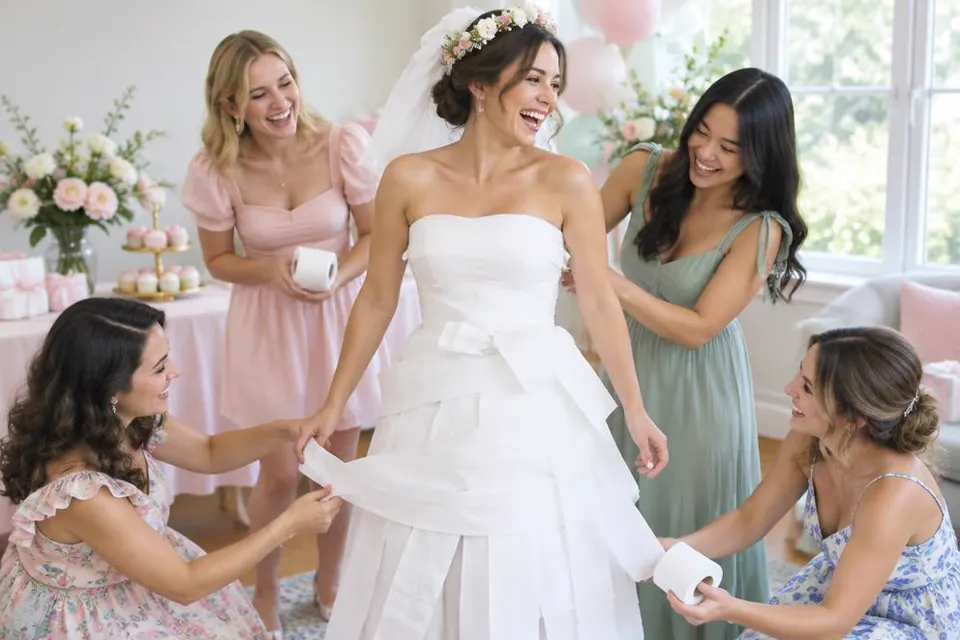
The toilet paper wedding dress game remains popular at showers with a playful, hands on crowd. Guests split into small teams and have a set amount of time to design a wedding dress out of toilet paper and tape, using one person from each team as the model. The bride judges the finished designs, and the game works well because it gets quieter guests laughing alongside the loudest ones.
Advice cards offer a quieter alternative that works well for mixed age groups. Each guest fills out a small card with marriage advice or a wish for the couple, which can be read aloud during the shower or saved for the bride to open later during a quiet moment. This option gives older guests, who may not want to play an active game, a meaningful way to participate.
Quick setup checklist for classic games
- Print bingo cards a few days ahead so they are ready when guests arrive
- Prepare interview questions for he said she said at least a week before the shower
- Buy extra toilet paper rolls, since teams often go through more than expected
- Set out advice cards and pens near the entrance so guests fill them in as they arrive
Games for Small, Intimate Showers
Smaller showers of ten guests or fewer often work better with games that encourage conversation rather than competition.
With a small group, you have room to slow down and let games become more of a shared conversation than a timed contest. A memory lane game, where guests bring a photo of themselves with the bride and share a short story before passing it around, tends to work beautifully in this setting. It takes longer than a typical party game, but that is the point, since a small shower usually has more time to spend on each activity.
A two truths and a wedding lie game also fits well here. The bride shares three statements about her relationship or wedding plans, two true and one invented, and guests guess which one is false. Because the group is small, everyone gets a turn to guess out loud, which keeps the energy personal rather than performative.
Another option that suits a close knit group is a recipe box activity. Each guest writes down a favorite recipe along with a short note for the couple, and these are collected into a small box the bride can take home and use for years. It is less of a game and more of a keepsake activity, but it fills the same role of giving guests something structured to do together.
Games for Large, Mixed Group Showers
Larger showers with guests who do not all know each other benefit from games that are easy to explain once and that naturally mix people together.
When a shower brings together coworkers, family from both sides, and friends from different chapters of the bride's life, the goal shifts from deep personal connection to comfortable, low pressure fun. Table trivia works well here. Print a short set of questions about the couple on each table and let tables work together as teams, which naturally gets strangers talking to each other without forcing introductions.
A human bingo mixer can also help break the ice at the very start of a large shower. Instead of gift related squares, the card lists traits like has known the bride for over ten years, works with the groom, or has been married longer than fifteen years. Guests mingle to find someone who matches each square, which gets everyone moving and talking before they settle into seats.
For the gift opening portion of a large shower, consider a shorter, simpler version of bridal bingo rather than a long, involved game, since gift opening with forty guests already takes a while on its own. The goal is to keep guests engaged during a necessarily long stretch of the event, not to add another twenty minutes of activity on top of it.
| Guest count | Best game style | Example games | Approximate time needed |
|---|---|---|---|
| Under 12 | Conversational, personal | Memory lane, two truths and a wedding lie | 20 to 30 minutes |
| 12 to 25 | Mix of mingling and seated games | Bridal bingo, he said she said | 30 to 45 minutes |
| 25 to 50 | Team based, easy to explain once | Table trivia, human bingo mixer | 40 to 60 minutes |
| 50 plus | Short, high energy bursts | Toilet paper dress contest, quick bingo | 30 to 40 minutes total across breaks |
Virtual and Hybrid Shower Games
When family or friends cannot attend in person, a few games translate well to video calls without feeling like an afterthought.
Virtual showers have become a normal part of modern wedding planning, especially when guests are spread across different countries or time zones. The trick to a good virtual game is choosing something that does not depend on physical materials everyone has to track down. A virtual he said she said works just as well on video as in person, since it only requires the host to share questions and read out guesses in the chat or out loud.
A show and tell round can also work nicely online. Ask guests ahead of time to have a small item nearby that represents their favorite memory with the bride, and give each person thirty seconds to show it and explain. It keeps everyone involved even with a large number of video tiles on screen, and it avoids the awkward silence that can happen when virtual games rely on guessing with no visual cues.
For hybrid showers, where some guests are in person and others are joining remotely, designate one person as the bridge between the room and the screen. This person reads out questions loudly enough for the camera to pick up, relays chat comments to the room, and makes sure remote guests are not left watching silently while the in person group laughs at something they could not hear.
Tips for keeping virtual guests engaged
- Send any game materials, like bingo cards, by email or mail at least a week ahead
- Keep each virtual game under ten minutes, since attention drops faster on video calls
- Use the chat function for guesses so remote guests do not have to unmute repeatedly
- Thank remote guests by name during the shower so they feel included, not forgotten
Writing the Rules So Nobody Is Confused
A great game idea can still fall flat if the rules are explained poorly, so it is worth scripting exactly what you will say before the shower begins.
Write out your instructions in plain, short sentences before the day of the shower. Read them aloud to yourself or a friend and time how long the explanation takes. If it takes more than about thirty seconds to explain a game, consider simplifying it, since guests tend to lose interest in instructions that run long, especially after a meal or a few drinks.
A simple script helps keep explanations consistent. For bridal bingo, something like, everyone has a card with common gift items, as the bride opens each present, check off anything on your card that matches, first person to get a full row shouts bingo and wins a prize, works well because it covers the goal, the action, and the win condition in three short sentences.
For games involving teams, assign teams before explaining the rules rather than after, so guests are not distracted by figuring out where to sit while you are talking. A simple way to split a shower of twenty or so guests into teams is to count off by twos or threes around the room, which avoids the slower process of letting people self select and cluster with only their closest friends.
Prizes That Feel Worth Playing For
Prizes do not need to be expensive to make a game feel worthwhile, but they do need to feel intentional rather than like an afterthought grabbed at the last minute.
Small, useful items tend to land better than novelty prizes that end up in a drawer. Scented candles, nice hand lotion, a small plant, or a pretty notebook are all well liked because they get used. If the shower has a theme, like a particular color palette or a garden setting, tying prizes loosely to that theme makes the whole event feel more put together without requiring extra effort.
Consider having a mix of prize tiers rather than one identical prize for every game. A slightly larger prize for the final or most competitive game of the day gives guests something to look forward to, while smaller prizes for earlier, lower stakes games keep things feeling fun rather than high pressure.
It is worth preparing one or two extra prizes beyond what you expect to need. Ties happen more often than planners expect, especially in trivia or bingo style games, and having a spare on hand means you are not scrambling to improvise when two guests call out at the same time.
Simple prize ideas by budget approach
- Shared household items like dish towels or a small cutting board
- Self care items such as lip balm, a sheet mask, or bath salts
- A small potted herb or succulent that guests can take home and grow
- A handwritten thank you note alongside a modest item, for guests who prefer sentiment over stuff
Pacing the Whole Shower Around the Games
Games work best when they are placed thoughtfully within the flow of the shower rather than clustered together or squeezed in as an afterthought.
A typical two to three hour shower has a natural rhythm: arrival and mingling, food, one or two games, gift opening, and a closing moment like cake or a toast. Placing a lighter, mingling style game early helps guests who do not know each other warm up before the more structured parts of the day. Saving a higher energy game, like the toilet paper dress contest, for after food gives guests a chance to move around after sitting for a while.
Avoid scheduling two long or similarly paced games back to back. If the first game was slow and conversational, follow it with something quicker, and vice versa. This variation keeps the overall energy of the shower from feeling flat in the middle, which is a common complaint about showers that otherwise have good individual games.
Build a small buffer into your schedule, since games almost always run a few minutes longer than planned once you account for explaining rules, waiting for latecomers to finish a round, or guests asking to play again. A loose schedule with five to ten minute buffers around each activity tends to feel more relaxed than a tightly timed one, even if the total shower length stays the same.
| Time | Activity | Notes |
|---|---|---|
| 0 to 20 minutes | Arrival, drinks, light mingling game | Human bingo mixer or similar works well here |
| 20 to 45 minutes | Food served | Keep plates simple so guests can eat and chat easily |
| 45 to 70 minutes | Main game, higher energy | Toilet paper dress contest or team trivia |
| 70 to 100 minutes | Gift opening with light game running alongside | Bridal bingo keeps guests engaged |
| 100 to 120 minutes | Cake, toasts, thank yous | Close on a warm, unhurried note |
Inviting Guests and Collecting Shower Details
Good games depend on good information gathered before the shower, including headcounts, dietary needs, and in some cases pre collected answers from the couple.
Several of the best wedding shower games, like he said she said, depend on gathering information from the bride or groom ahead of time, which means your invitation and planning timeline need to build in that step early. Send a short list of questions to the groom at least two weeks before the shower so there is time to follow up if the answers are vague or incomplete.
This is also where an online invitation with built in RSVP tracking becomes genuinely useful rather than just convenient. A site like My Joyfullday lets you send a shower invitation with a simple RSVP guests can respond to over WhatsApp, which makes it much easier to get an accurate headcount before you print bingo cards or buy prize quantities. Knowing you have eighteen confirmed guests rather than a rough guess of fifteen to twenty saves you from running short on materials halfway through a game.
When collecting RSVPs, consider adding one optional question asking guests if they have any mobility considerations or if they would prefer to skip active games. This small addition helps you plan a shower that is comfortable for everyone without singling anyone out directly at the event itself.
Pre shower information checklist
- Confirmed guest count at least five days before the shower
- Dietary restrictions collected alongside RSVPs
- Groom's answers for he said she said or similar games gathered at least a week ahead
- Any mobility or comfort notes from guests reviewed before finalizing the game list
- Printed materials, like bingo cards, prepared with a few spares beyond the confirmed count
Handling Reluctant or Shy Guests
Not every guest wants to be the center of attention, and a thoughtful host plans for that without making anyone feel singled out.
Every shower has at least a few guests who would rather watch than participate, whether because of shyness, unfamiliarity with the group, or simply personal preference. Build in games that allow for comfortable sideline participation, such as advice cards or voting on toilet paper dress designs, so quieter guests still feel included without being forced to speak in front of a crowd.
Avoid games that require guests to reveal personal information publicly, like detailed relationship histories, unless you know the group well enough to be confident everyone is comfortable. If you are unsure, offer a written version of the same idea, where guests write their answer on a card instead of saying it aloud, which lowers the pressure considerably while keeping the spirit of the game.
If you notice a guest hanging back during a mingling game, a brief, warm introduction can help. Something as simple as, this is Carla, she has known the bride since university, works well to give a shy guest an easy entry point into conversation without putting them on the spot to introduce themselves.
Wrapping Up the Shower on a Warm Note
However the games go, the final moments of a wedding shower tend to shape how guests remember the whole afternoon, so it is worth planning the ending as carefully as the middle.
After the last game and the final gift is opened, give the bride a quiet moment to say a few words of thanks to the group. This does not need to be long or polished. A short, genuine thank you tends to land better than a rehearsed speech, and it gives guests a natural, warm closing point before cake or dessert is served.
If advice cards were collected earlier in the shower, this is a good time to hand them over as a small bundle rather than reading every single one aloud, which can run long with a bigger group. The bride can read through them at her own pace later, often in the quiet days leading up to the wedding when a reminder of her community means even more.
As guests say their goodbyes, a small thank you favor, even something modest like a packet of seeds or a tiny treat, leaves a nice final impression without adding significant planning burden. Pair it with a simple thank you message sent afterward, which many hosts now send through the same platform used for the original invitation, keeping all the shower communication in one place for guests to find easily.
Closing moment ideas
- A short thank you speech from the bride before dessert
- Handing over a bundle of written advice cards to read later
- A small take home favor by the door
- A follow up thank you message sent within a few days of the shower