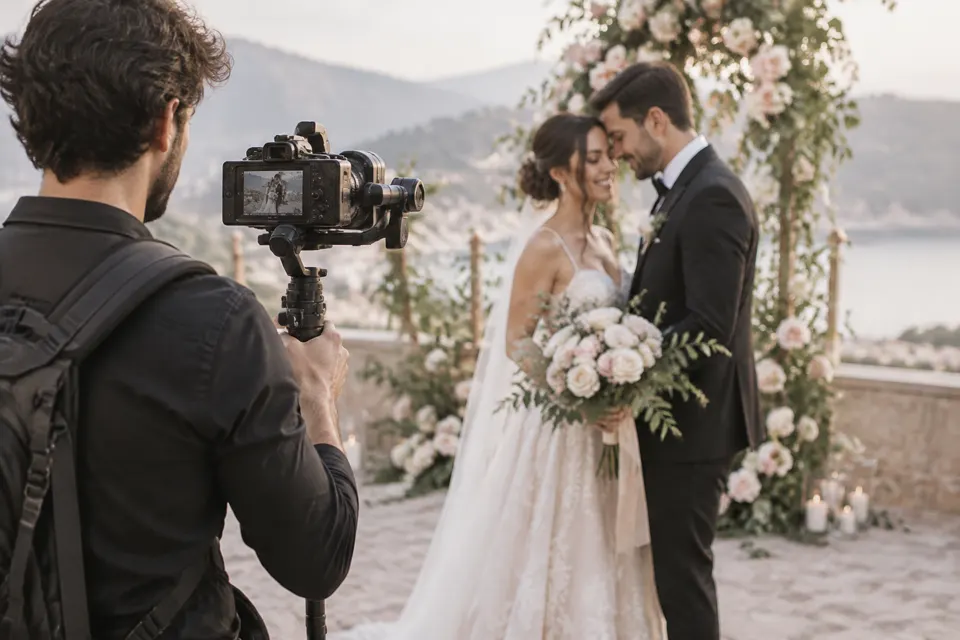
Defining Your Visual Narrative Style
The foundation of a successful wedding videographer hiring guide begins with a clear vision of your film's aesthetic and emotional tone. Before you browse portfolios, you must define the visual narrative style that resonates with your personal history and future legacy.
Selecting a videography style is more than a creative choice: it is the primary filter for your search. Many couples start their journey by looking at price tags, but without a defined style, you risk hiring a high quality vendor whose artistic vision clashes with your expectations. Cinematic style focuses on high production value with slow motion, aerial drone shots, and dramatic lighting. In contrast, Documentary style prioritizes real time events without staging. Storytelling uses audio snippets from vows or toasts to weave a narrative, while Traditional style follows a linear timeline of the day with minimal stylistic flair.
Breaking Down the Four Core Styles
Visual Narrative Categories
- Cinematic: Uses tools like gimbals and sliders to create a movie-like feel with heavy color grading and theatrical music.
- Documentary: A fly on the wall approach that captures raw, unscripted moments as they happen without interference from the crew.
- Storytelling: Focuses heavily on the 'why' of the wedding, using voiceovers from speeches to connect emotional dots across the footage.
- Traditional: A classic, chronological record of the ceremony and reception, usually delivered with simple cuts and natural audio.
Consider the scenario of Sarah and David. They initially believed they wanted a highly produced cinematic trailer because they saw them frequently on social media. However, after reviewing their daily media habits, they realized they preferred raw, long form YouTube vlogs and home movies over polished advertisements. They shifted their search to documentary filmmakers who could capture the quiet, unscripted interactions between their grandparents. This pivot saved them from a final product that would have felt performative rather than authentic to their relationship.
To identify your own preference, conduct a minute by minute analysis. Find three wedding clips online, each representing a different style. Watch exactly three minutes of each. Note your physiological reactions: do you get goosebumps during a dramatic music swell, or do you find yourself leaning in when you hear a funny, unscripted comment from a bridesmaid? These emotional triggers are the most reliable indicators of what you will value in ten years. Use these notes to create a style brief for potential vendors.
Style Identification Exercise
- Watch three clips for exactly three minutes each.
- Mute the audio for one minute to see if the visuals alone are engaging.
- Identify if you prefer natural light or dramatic, artificial lighting.
- Determine if you want to hear your vows throughout the entire film.
- Decide if you want a chronological or non-linear edit.
- Note if you prefer slow motion or real-time movement.
- Rank the importance of candid moments versus posed portraits.
- Assess if you want the videographer to direct you or remain invisible.
Once you have selected a style, use it as a strict vetting tool. A videographer who specializes in traditional, linear coverage will struggle to deliver a cinematic masterpiece, even if they have expensive equipment. By defining your visual narrative style early, you align your expectations with the artist's natural workflow. This clarity prevents the common mistake of asking a creator to work outside their comfort zone, which often leads to a disjointed final film that fails to capture the true essence of your wedding day.
Budgeting Formulas and Market Reality
Understanding the financial landscape of wedding videography requires balancing regional averages with the specific technical demands of film production. This section breaks down the 10 percent rule and market realities to help you allocate funds effectively.
To establish a baseline, look at the broader wedding economy. In the US, the average wedding cost is about $33,000 according to The Knot Real Weddings Study 2025. In the UK, figures range from £20,600 per Bridebook 2024 to £23,000 via Which? 2024. Australian couples spend about A$35,315 according to Easy Weddings 2025, while Canadian weddings average C$30,000 according to RBC. Across these markets, the 10 percent rule suggests allocating a tenth of your total budget specifically to videography. This ensures the professional quality necessary for a lasting heirloom without compromising other essential vendors.
Service Tiers and Deliverable Expectations
A common mistake is assuming that a higher price only pays for better gear. In reality, you are paying for labor hours in the editing suite and the security of data redundancy. Consider Sarah and Mark, a couple who allocated 5 percent of their budget and received a single camera edit with poor audio. Conversely, Elena and David followed the 10 percent rule and secured a lead shooter and an assistant. This allowed for multi angle coverage of their vows and high quality external audio recording, which are the hallmarks of mid range and premium videography packages worldwide.
| Package Tier | Personnel | Typical Deliverables | Labor Focus |
|---|---|---|---|
| Entry Level | Solo Operator | 3 minute highlight film | Basic chronological edit |
| Mid Range | Lead + Assistant | 6 to 8 minute film + Ceremony | Color grading and audio mixing |
| Premium | Two Lead Shooters | 10 plus minute film + Speeches | Narrative storytelling and sound design |
| Luxury | Multi Person Crew | Feature film + Social teasers | Extensive soundscape and licensed music |
Beyond the base package, several factors will impact your final invoice. Travel fees are standard if the venue is beyond a set radius, often calculated per mile or as a flat daily rate for destination weddings. If you desire a cinematic look with multiple perspectives, an additional shooter is mandatory. This increases the cost by roughly 20 to 30 percent but ensures the videographer never misses a moment while resetting equipment. You should also account for hard drive and shipping costs if you request raw footage, as this requires high capacity storage and significant data transfer time.
When reviewing quotes, look for transparency regarding post production revisions. Most standard contracts include one or two rounds of minor edits. Significant changes to the music or narrative structure after the final cut is delivered will result in hourly labor charges. To avoid these hidden costs, ensure your vision is aligned during the initial consultation. Budgeting for videography is not just about the hours spent on site, it is an investment in the hundreds of hours required to cull, sync, and grade your footage into a cohesive story.
Budgeting Accuracy Checklist
- Confirm if local taxes are included in the quoted price.
- Verify if the travel fee covers accommodation for the crew.
- Check the cost of adding a second shooter for three hours.
- Inquire about the price for a physical hard drive of raw files.
- Assess the cost of licensing specific commercial songs.
- Determine the hourly rate for additional coverage time.
- Identify the fee for expedited editing turnarounds.
- Ask about the price of drone footage as an add on.
Ultimately, your wedding videographer hiring guide should prioritize the 10 percent rule as a flexible framework rather than a rigid limit. If cinema is your highest priority, you might shift funds from floral decor to secure a higher tier filmmaker. By understanding the labor involved in multi camera setups and complex sound design, you can make an informed decision that reflects the market reality of your specific region while protecting your financial interests during the planning process.
The Technical Vetting Framework
While a beautiful soundtrack can mask many flaws, mastering the wedding videographer hiring guide requires a deep dive into the technical backbone of a production. Couples must learn to isolate raw visual and auditory data from the emotional pull of the music to ensure their investment holds up on high definition screens.
The most common trap in portfolio review is the Halo Effect created by a popular song. A cinematic track can make shaky footage or poor coloring seem intentional. To truly vet a professional, watch a highlight reel on mute first. Consider a couple like Sarah and David who loved a film for its indie folk soundtrack but failed to notice the skin tones shifted from orange to magenta in every shot. By removing the audio, you can focus purely on the stability of the frame and the sharpness of the focus. High quality videography remains visually compelling even when the emotional cues of the music are stripped away.
Audio clarity is the most difficult element to perfect but the most vital for long term enjoyment. While music sets the mood, the vows and speeches provide the narrative heart. If a videographer only shows clips with music overlays, ask to hear a raw clip of a ceremony. Listen for wind interference in outdoor settings or the cavernous echo often found in stone cathedrals. A skilled professional uses lapel microphones and digital recorders hidden at the lectern to ensure voices sound crisp and intimate, rather than distant or muffled by environmental noise. If the audio is thin or crackly, no amount of visual editing can save the final film.
Mastering Lighting and Color Consistency
Lighting is the ultimate test of a videographer's technical range. Most weddings move from bright, natural outdoor light to dim, artificially lit reception halls. Check the portfolio for high ISO noise, which appears as digital grain or fuzziness in dark scenes. A professional should demonstrate clean footage during the first dance, even if the room is lit only by candles or fairy lights. Look for how they handle mixed lighting, such as a subject standing near a blue window while yellow tungsten lights glow inside. The skin tones should remain natural and consistent across these transitions rather than looking muddy or discolored.
| Scenario | Technical Challenge | Sign of High Quality | Warning Sign |
|---|---|---|---|
| Windy Beach | Wind noise on mics | Clear voices with wind muffs | Buffeting or distorted audio |
| Stone Cathedral | Heavy natural reverb | Direct, intimate vocal pick up | Hollow, echoey speech |
| Dim Ballroom | Digital sensor noise | Clean blacks and sharp edges | Grainy or flickering footage |
| Sunset Ceremony | Extreme dynamic range | Visible faces and blue sky | Blown out white backgrounds |
| Dance Floor | Rapid movement | Smooth tracking shots | Nausea inducing camera shake |
Consistency in color grading separates the amateurs from the experts. A wedding film should feel like a singular cohesive story, not a collection of disjointed clips. Evaluate if the greens in the park match the greens in the garden shots. If one scene is moody and desaturated while the next is bright and neon, the videographer may be relying on pre made filters rather than manual grading. Ask the videographer if they use a unified color science across all cameras. This ensures that footage from a second shooter or a drone blends seamlessly with the primary camera, preventing jarring visual shifts that distract the viewer.
The Technical Quality Checklist
- Do skin tones look natural and consistent in both sun and shade?
- Is there a noticeable lack of digital grain in low light reception clips?
- Can you hear the rustle of clothing or wind over the spoken vows?
- Are the horizons level in wide landscape and architectural shots?
- Does the focus remain sharp on the subjects during walking sequences?
- Is the white balance consistent between the ceremony and the speeches?
- Are there multiple audio sources used for the ceremony and toasts?
- Does the drone footage match the color and texture of the ground cameras?
- Are there clear transitions that do not rely on cheesy digital effects?
Finally, examine the frame rates used for different emotions. Slow motion is a powerful tool for romantic moments, but it should be captured at a high frame rate to avoid stuttering. If a slow motion shot looks choppy, the videographer likely forced a standard clip to slow down in post production. Conversely, real time footage of speeches should be fluid and lifelike. When these technical foundations are solid, the film becomes a timeless artifact rather than a trendy montage. By focusing on these metrics, you ensure that the documentation of your day is as professional as the event itself.
The Interview: Critical Questions and Scripts
The interview phase is the bridge between technical vetting and final selection, serving as your opportunity to gauge how a videographer operates under pressure. This section provides the specific scripts and inquiries needed to ensure your wedding film remains a seamless part of your celebration.
When you sit down for your consultation, your goal is to understand the videographer's physical footprint and operational ethics. While their portfolio showcases the final product, the interview reveals the process behind it. You should prioritize questions that address logistics, such as how they navigate local drone regulations and what happens if their primary camera fails mid-ceremony. A professional should have immediate, rehearsed answers for these scenarios. This dialogue prevents future friction by aligning expectations on how much space they require and how they maintain a discreet presence during intimate moments.
The Ten Question Operational Script
Workflow and Safety Inquiries
- How do you coordinate with our photographer to ensure you are not in each other's shots?
- What is your exact backup equipment policy if a camera body or memory card fails?
- Do you carry valid liability insurance and necessary drone permits for our specific location?
- What is your strategy for capturing clear audio during an outdoor or windy ceremony?
- How many shooters will be present, and what is their attire for a formal event?
- Can you describe your physical footprint during the exchange of vows?
- How do you handle low light situations without using intrusive floodlights?
- What is your protocol if you are unable to attend due to an emergency?
- How do you manage data redundancy and file storage immediately after the wedding?
- What specific moments do you consider essential for the highlight reel versus the full film?
Consider the experience of Chloe and Marcus, a couple who prioritized a minimalist aesthetic for their cathedral wedding. By asking Question 6, they discovered their initial choice intended to use a large stabilizer rig and three heavy tripods in the center aisle. This discovery allowed them to pivot to a videographer who specialized in handheld, low profile equipment. By addressing the physical footprint early, Chloe and Marcus avoided a conflict where the videographer might have obstructed the guests' view or the photographer's angles. This highlights why asking about physical movement is as vital as discussing the artistic style.
Collaboration extends beyond the physical space to the technical synchronization of the day. A videographer must be able to describe how they tap into the venue's soundboard or where they place discrete lapel microphones. If a vendor cannot explain their audio backup plan, it is a significant red flag. High quality video with poor audio is a common regret for many couples. You want a partner who respects the sanctity of the ceremony while remaining vigilant about the technical requirements of the medium. Their answers should reflect a balance of artistic vision and logistical precision.
Interview Response Green Flags
- Confirms they use at least two separate audio recording sources.
- Describes a 'redundant' backup system where footage is saved to two cards simultaneously.
- Possesses a clear plan for inclement weather and gear protection.
- Shows enthusiasm for collaborating with other hired vendors.
- Provides clear timelines for the delivery of raw footage and edited films.
- Explains drone limitations based on local flight path laws or venue restrictions.
- Offers a clear contract that outlines all discussed verbal promises.
- Displays a professional demeanor that matches your wedding's formality level.
Finally, use the interview to verify their post wedding data management. A professional videographer should mention 'offsite backups' or 'cloud storage' as part of their workflow. Knowing your memories are safe from the moment they are captured until the final edit is delivered provides peace of mind. As you conclude the session, ensure you have a clear understanding of their revision policy. Most professionals include one or two rounds of minor edits, but establishing this during the interview prevents hidden costs later. Use these scripts to move from a place of uncertainty to one of informed confidence.
Contract Essentials and Deliverables
Navigating the legalities of your wedding videographer hiring guide ensures that artistic expectations align with enforceable protections. This phase transitions your relationship from creative collaboration to a formal partnership by defining exactly what you will receive and when.
Understanding specific deliverables prevents post wedding disappointment regarding the length and format of your video. A highlight reel is a cinematic summary lasting three to seven minutes, designed for emotional impact and easy sharing. In contrast, a feature film typically spans fifteen to forty minutes, incorporating longer segments of vows and speeches. Raw footage consists of every unedited clip captured by the cameras, usually totaling several hours. Couples like Sarah and Marcus often assume raw footage is included by default, but most professionals treat this as a separate add on because it requires additional hard drives and file preparation.
Defining the Deliverable Matrix
| Deliverable Type | Typical Duration | Editing Style | Best Used For |
|---|---|---|---|
| Highlight Reel | 3 to 7 Minutes | High energy, music driven | Social media and announcements |
| Feature Film | 15 to 40 Minutes | Chronological storytelling | Family viewing and archiving |
| Social Teaser | 60 Seconds | Fast paced, vertical | Instagram Reels or TikTok |
| Raw Footage | 4 to 10 Hours | Uncut, uncolorized clips | Historical preservation |
| Full Ceremony | 30 to 60 Minutes | Multi camera documentary | Full record of vows |
The delivery timeline is a critical clause that establishes accountability for the editing phase. While many couples are eager to see their footage immediately, professional color grading and sound mixing take time. A standard contract should specify a teaser release within one to two weeks and a final film delivery within twelve to twenty weeks. When negotiating, avoid vague terms like as soon as possible. Instead, use a script such as: We would like to include a specific deadline for the final film delivery, with a clause stating how we will be notified if a delay occurs due to peak season volume.
Music licensing and usage rights represent the most overlooked legal aspects of wedding videography. If you plan to post your film on YouTube or Instagram, the videographer must use licensed tracks to avoid copyright strikes and muting. Ensure your contract specifies that the studio provides licensed music for all public versions of the film. Furthermore, clarify usage rights for social media. Some contracts grant the videographer perpetual rights to use your likeness for their marketing. If you prefer privacy, you may need to negotiate a privacy fee or a limited usage clause that restricts where they can post your footage.
Mandatory Contract Protection Clauses
- Cancellation and Rescheduling: Specify what happens to the retainer if the date changes due to emergencies.
- Force Majeure: Define protections for both parties in the event of natural disasters or government restrictions.
- Substitution Clause: Outline the plan if the lead videographer is ill, ensuring a comparable professional is provided.
- Payment Schedule: List the deposit amount and the date for the final balance, usually thirty days before the event.
- Editing Revisions: State the number of included edit rounds, typically one or two, and the cost for additional changes.
While total wedding costs vary significantly, with the US average about $33,000 according to The Knot Real Weddings Study 2025 and Australia about A$35,315 according to Easy Weddings 2025, the videography portion usually represents ten to fifteen percent of the total spend. In the UK, where Bridebook 2024 reports an average cost of £20,600, and Canada where RBC reports C$30,000, couples should ensure their contract protects this investment. A solid agreement is not just about the final file, it is about securing the peace of mind that your memories are legally and technically protected.
Final Contract Review Checklist
- Final delivery date is clearly stated for all video versions.
- Music licensing covers all social media platforms.
- Cancellation policy defines refundable versus non refundable fees.
- Raw footage ownership and delivery method are specified.
- Number of hours of coverage on the wedding day is listed.
- Number of permitted revision rounds is clearly defined.
- Process for handling technical failures or lost footage is included.
- Travel and accommodation costs are itemized or inclusive.
Maximizing Value: The Wedding Day Workflow
The success of your wedding videographer hiring guide depends on how you facilitate the creative process during the actual event. By optimizing the daily workflow, you allow the professional to capture dynamic movement rather than static poses.
To achieve high production value, you must treat your videographer as a director of motion rather than a silent observer. Consider a couple like Sarah and David who ensured their morning prep room was free of plastic bags and clutter. This simple preparation allowed their videographer to focus on the movement of light across the bridal gown. When the videographer has space to move, they can use gimbals and sliders to create cinematic sweeps. Providing a clean environment and a clear schedule ensures that the professional captures the organic flow of the day without technical obstructions or background distractions.
The Motion-First Shot Formula
Video differs from photography because it relies on kinetic energy to tell a story. Instead of a standard checklist of faces, prioritize a formula of Action plus Reaction. For the dress, do not just film it hanging: film the ruffling of the fabric as it is lifted. For the first look, the videographer needs to capture the physical intake of breath and the step forward. This formula prioritizes the transition between states. It transforms a gallery of images into a living narrative that reflects the actual energy of the room, ensuring the final film feels active rather than a slideshow of stills.
Essential Cinematic Movement Cues
- The Veil Toss: Having a bridesmaid release the veil into the wind for a slow motion descent.
- The Walk and Talk: Walking toward the camera while interacting naturally to create depth.
- The Tactile Detail: Close up shots of hands trembling while holding vows or adjusting a tie.
- The Recessional Energy: Capturing the high speed movement and cheering as the couple exits the ceremony.
- The Fabric Sway: Encouraging the couple to sway or twirl during portraits to catch light in the dress layers.
The Golden Hour represents the fifteen to twenty minutes before sunset when the light is soft, warm, and directional. This is the most critical window for your videographer. While photographers also love this time, the videographer needs dedicated minutes where you are moving specifically for the film. During this period, the light wraps around subjects, hiding skin imperfections and creating a natural glow that no post production filter can replicate. If you skip this window to stay at the cocktail hour, you lose the opportunity for the most romantic and visually stunning sequences of your entire wedding film.
Workflow Optimization Checklist
- Assign a point person to clear clutter from the dressing suite before the videographer arrives.
- Schedule 15 minutes of dedicated Golden Hour time away from guests.
- Inform the officiant to step aside during the first kiss to clear the frame.
- Ensure the microphone placement on the groom or celebrant is checked ten minutes before the ceremony.
- Practice a slow, steady walk down the aisle to allow for focus tracking.
- Coordinate with the photographer to ensure they do not block the videographer's primary angles.
- Build a buffer of ten minutes into the hair and makeup schedule to avoid rushing the detail shots.
- Designate a specific area for the couple's first look that offers 360 degree movement.
- Verify that the reception lighting plan includes enough ambient light for the camera sensors.
Common mistakes often involve overlooking the logistics of sound and light. For example, a couple may choose a beautiful clifftop for vows but forget that high winds will ruin the audio. A proactive workflow involves a sound check where the videographer clips a lapel microphone to the groom or officiant. By communicating the timeline clearly, you allow the professional to set up tripod positions in advance. This prevents the videographer from scrambling during key moments like the first dance. A well managed workflow results in a film that feels effortless and polished, reflecting the true atmosphere of the celebration.
| Event Phase | Dedicated Video Time | Primary Creative Goal |
|---|---|---|
| Morning Prep | 45 Minutes | Capture detail texture and candid anticipation |
| First Look | 20 Minutes | Record authentic emotional reactions and movement |
| Sunset Session | 15 Minutes | Utilize Golden Hour light for romantic portraits |
| Reception Kickoff | 10 Minutes | Establish the venue atmosphere and decor details |
Ultimately, your role is to provide the videographer with the time and environment necessary to execute their craft. While the total wedding cost may be high, such as the US average of $33,000 according to The Knot Real Weddings Study 2025 or A$35,315 in Australia per Easy Weddings 2025, the value of the video is realized through these small workflow adjustments. By prioritizing motion and light over static poses, you ensure your investment yields a masterpiece. Treat the workflow as a partnership where your cooperation directly influences the cinematic quality of the final delivery, making every second of the footage count toward your legacy.
Post Production: Editing and Feedback Loops
The final stage of the wedding videographer hiring guide focuses on the transformation of raw footage into a polished narrative through the post production phase. Success during this period requires patience and a structured approach to communication as your editor crafts the definitive record of your celebration.
The industry standard timeline for receiving your final film typically ranges from 12 to 24 weeks. This duration reflects the labor intensive nature of color grading, sound mixing, and narrative assembly. While it is tempting to request updates weekly, remember that a rushed edit often results in missed emotional beats. For context, while the total wedding budget might average US $33,000 according to The Knot Real Weddings Study 2025 or A$35,315 per Easy Weddings 2025, the post production labor accounts for roughly 60 percent of the videographer's total time investment. Trusting this timeline ensures the high quality result you paid for.
The Structured Feedback Protocol
When the first draft arrives, view it together with your partner on a high quality screen rather than a phone. To provide actionable feedback, use a timecode based log. Instead of saying the middle part feels slow, note that at the 04:12 mark, the transition from the ceremony to the reception feels abrupt. This level of specificity allows the editor to make precise adjustments without guesswork. Consider the case of Sarah and David, who used a shared spreadsheet to list every timestamp they wanted adjusted. This clarity reduced their total revision time by two weeks compared to vague email chains.
| Feature | Change Capability | Complexity Level |
|---|---|---|
| Clip Swapping | High: Replacing one shot for another | Low |
| Color Grading | Moderate: Adjusting warmth or brightness | Medium |
| Music Choice | Low: Requires full re-edit of pacing | Extreme |
| Audio Quality | Fixed: Limited by original recording | Technical |
| Graphic Text | High: Correcting names or dates | Very Low |
Understanding the limits of revisions is vital for a smooth collaboration. Most contracts include one or two rounds of minor edits. Significant changes, such as swapping the primary song choice after the edit is complete, usually incur heavy additional fees because the entire rhythm of the film is synced to the beat of the music. If you are unsure about a music track, voice that concern before the editing process begins. Focus your feedback on shot selection, ensuring your favorite family members are featured and that the narrative flow matches the energy of the day you remember.
Final delivery usually involves a digital download link or a dedicated hosting site. Once you receive these files, create three backups immediately. Store one on a local hard drive, one in a cloud service, and one on a physical drive at a different location. As technology evolves, having the raw files or high bitrate masters ensures your film remains viewable decades from now. By following this systematic approach to post production, you ensure the final product is not just a video, but a legacy asset that justifies the significant investment made in your wedding day.
Post Production Milestones
- Confirm the expected delivery date via email after the wedding.
- Watch the first draft twice before writing down any feedback.
- Create a timestamped list of specific shots to add or remove.
- Check all name spellings in the titles and end credits.
- Verify that the audio levels for vows and speeches are clear.
- Request the final high resolution files via a secure transfer link.
- Download and save the film to at least two separate physical locations.
- Share the final social media teaser with your guests and vendors.