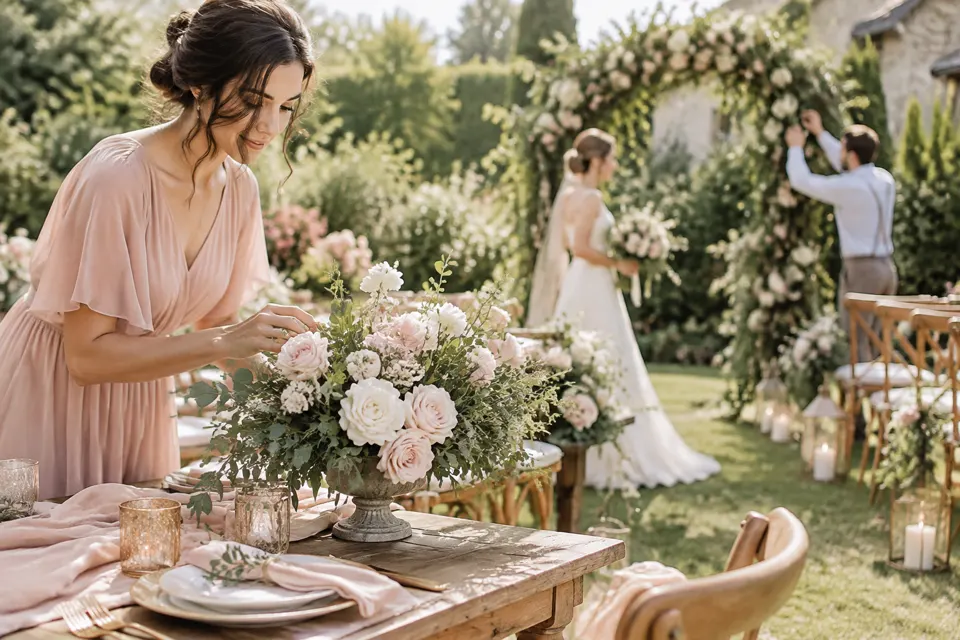
Establishing Your Garden Wedding Budget Framework
Planning a garden wedding requires a specialized financial approach that accounts for the inherent unpredictability of the outdoors. Success begins with understanding that nature provides the beauty, but you must provide the infrastructure.
When learning how to plan a garden wedding, your first step is acknowledging the hidden costs of outdoor logistics. While a hotel ballroom includes tables, chairs, and restrooms, a garden is often a blank slate. On average, garden weddings cost 15 percent more than traditional indoor venues due to the necessity of professional rentals. Current market data reflects significant regional differences: the US average is about $33,000 (The Knot Real Weddings Study 2025), the UK ranges from £20,600 (Bridebook 2024) to £23,000 (Which? 2024), Australia is about A$35,315 (Easy Weddings 2025), and Canada is approximately C$30,000 (RBC). These benchmarks serve as a starting point for your total expenditure.
The 50:30:20 Garden Budget Allocation
To manage these costs effectively, we recommend the 50:30:20 framework. Allocate 50 percent to your venue and catering, which covers the site fee and all food service logistics. Dedicate 30 percent to vendors including photography, attire, and entertainment. The final 20 percent is the vital Garden Contingency Fund. This specific reserve covers unexpected weather adjustments, pest control, and last minute landscape grooming. Unlike standard wedding buffers, this fund is dedicated solely to the unique challenges of the outdoor environment. By isolating these funds early, you prevent logistical surprises from cannibalizing your decor or photography budget later in the planning process.
Consider the scenario of Sarah and Marcus. They found themselves choosing between two distinct garden styles. Option A was a public botanical park with a high permit fee but existing restrooms. Option B was a private family garden with no fee but a slope that required professional leveling and a portable restroom trailer. After running the numbers, they realized the private garden required 25 percent more of their budget for infrastructure alone. They chose the public park, redirecting their infrastructure savings into a higher quality catering experience. This decision framework focuses on where your money achieves the most guest impact.
| Expense Category | Public Park Setup | Private Estate Setup | Budget Impact |
|---|---|---|---|
| Permits and Fees | High Fixed Cost | Minimal or None | Venue Segment |
| Restroom Hire | Usually Included | Luxury Trailer Needed | Contingency Segment |
| Power Supply | Grid Access | Generator Required | Vendor Segment |
| Waste Removal | Public Service | Private Contractor | Contingency Segment |
| Leveling/Flooring | Paved Paths | Subflooring Required | Infrastructure Segment |
Common mistakes during this phase include ignoring the cost of lighting and sound amplification. In an indoor setting, sound bounces off walls: outdoors, it dissipates into the open air. This means your audio visual budget may need to be 10 percent higher to ensure guests can hear the ceremony. Additionally, garden weddings require specific insurance riders for outdoor events. As you build your framework, ensure every line item accounts for the transport and setup fees that vendors charge for navigating difficult terrain. These small additions are what often lead to the 15 percent premium associated with successful outdoor celebrations.
Budget Framework Readiness Steps
- Calculate total budget based on your regional average.
- Set aside exactly 20 percent for the Garden Contingency Fund.
- Request a quote for a restroom trailer if the site has fewer than two toilets per 50 guests.
- Verify if the venue fee includes trash removal and cleanup.
- Allocate a specific line item for outdoor sound reinforcement.
- Check permit requirements for noise and public land usage.
- Estimate the cost of a tent rental even if you hope for sun.
- Confirm if vendors require an extra 'difficult access' fee for equipment.
- Review your budget against the 50:30:20 rule for balance.
Navigating Terrain: Soil, Slope, and Accessibility
Transforming a raw landscape into a functional venue requires more than an eye for aesthetics; it demands a technical assessment of the ground beneath your feet. Understanding how to plan a garden wedding involves mastering the physical constraints of soil density and elevation to ensure guest safety and structural integrity.
Before signing any venue contract, conduct a thorough site inspection focused on soil density. Soft ground is the primary enemy of event infrastructure, as chair legs and high heels can sink into the turf, causing discomfort or injury. Take a cue from couples like Sarah and Liam, who performed a Heel Test across their family estate. To do this, walk the ceremony and reception areas in stiletto heels after a period of hydration or light rain. If the heel sinks more than one centimeter with average body weight, you must invest in interlocking plastic subflooring or choose a different focal point for the seating.
The Slope Formula for Event Flooring
Placing a marquee on a visible incline is a common mistake that leads to sliding furniture and spilled drinks. To determine if your terrain requires a professional cassette flooring system, use the Slope Formula. Measure a ten foot horizontal run using a string level and a tape measure. If the vertical drop over those ten feet exceeds six inches, the slope is greater than five percent. At this point, a standard ground-set marquee is no longer viable. You will need a leveled platform built on a scaffolding system, which significantly increases the infrastructure portion of your total wedding investment.
| Terrain Grade | Soil Condition | Action Required | Accessibility Impact |
|---|---|---|---|
| 0 to 2 percent | Firm and Dry | Direct ground setup | Full ADA compliance possible |
| 3 to 5 percent | Damp or Soft | Protective mesh or mats | Assistance needed for chairs |
| 6 to 10 percent | Sandy or Loose | Integral timber flooring | Ramp systems mandatory |
| Over 10 percent | Variable | Scaffolded sub-frame | Elevated lift or long ramps |
| Any grade | Muddy or Saturated | Total ground cover | High risk for mobility aids |
Logistics and vendor load-in represent another hidden challenge in garden settings. Heavy catering trucks and equipment vans can easily rut a soft lawn, leaving permanent damage to the landscape. When interviewing vendors, use this specific script to verify their needs: We are hosting our event on a natural lawn. What is the maximum axle weight of your delivery vehicles, and do you require plywood pathing to prevent tire ruts? Ensuring they have low-pressure tires or lightweight trolleys prevents a situation where a florist or caterer gets stuck in the mud hours before the ceremony begins.
Ensuring Universal Access and Inclusion
Meeting accessibility standards like the ADA in the United States or similar global frameworks is vital for inclusivity. An accessible path must be at least 36 inches wide and composed of a firm, stable, and slip-resistant material. Avoid loose gravel or thick wood chips, as these are impassable for wheelchairs and walkers. If the garden lacks paved paths, temporary rollout walkways made of recycled plastic or heavy-duty rubber are effective solutions. These allow guests with limited mobility to navigate the space independently without the need for invasive permanent construction that might disturb the garden's natural beauty.
Terrain and Accessibility Final Inspection
- Identify the primary path from the parking area to the ceremony site.
- Confirm that the catering tent location is within 50 feet of a hard standing surface.
- Check for overhead obstructions like low-hanging branches for high-peak marquees.
- Verify that all ramps have a slope ratio no steeper than 1:12.
- Locate underground irrigation lines to avoid damage from tent stakes.
- Identify areas where water naturally pools during heavy rain.
- Ensure there is a clear, level area for the portable restroom trailer.
- Test the cell signal strength across the terrain for emergency communication.
Budgeting for these ground preparations is essential. While the average US wedding costs about $33,000 according to The Knot Real Weddings Study 2025, and UK weddings average between £20,600 (Bridebook 2024) and £23,000 (Which? 2024), garden weddings often shift funds from venue rental to infrastructure. In Australia, where costs average A$35,315 (Easy Weddings 2025), or Canada at C$30,000 (RBC), approximately 15 percent of the budget should be reserved for flooring and site leveling. Planning for these technical aspects early ensures that your natural setting remains a beautiful backdrop rather than a logistical nightmare for your guests.
The Plan B Framework: Beyond Just Rain
When learning how to plan a garden wedding, your contingency strategy must address the full spectrum of environmental challenges rather than focusing solely on precipitation. A robust Plan B transforms environmental volatility into a managed logistical sequence that protects both guest experience and your investment.
Weather risks for outdoor celebrations generally fall into three categories. Extreme heat can lead to guest exhaustion and wilted floral arrangements if shade is not prioritized. Unexpected rain poses an obvious threat to electronics and formal attire, requiring immediate overhead cover. High winds are often overlooked but can be the most destructive, capable of toppling unsecured floral arches or blowing lightweight catering equipment off tables. For example, a couple like Sarah and Leo might choose a coastal garden where 30 kilometer per hour gusts are common. They would need to secure all tabletop decor with heavy bases and ensure that their florist uses weighted structures for the ceremony backdrop.
The Decision Trigger: When to Pivot
The most common mistake in how to plan a garden wedding is treating a tent as a last minute addition. Most professional rental companies require a definitive commitment 72 hours prior to the event to mobilize crews and equipment. This 72 hour mark serves as your final Decision Trigger. If the forecast shows a 40 percent or higher chance of rain, or temperatures exceeding 32 degrees Celsius, you must activate your backup rentals. Delaying this decision often results in rush fees or, worse, the equipment already being booked by another couple. A clear timeline prevents emotional decision making during a high stress week.
| Scenario | Primary Risk | Immediate Action | Infrastructure Need |
|---|---|---|---|
| Extreme Heat | Guest Dehydration | Move ceremony to shade | Industrial Misting Fans |
| Heavy Rain | Equipment Damage | Activate tent sidewalls | Raised Flooring |
| High Winds | Structure Collapse | Lower umbrellas and sails | Weighted Sandbags |
| Cold Snap | Guest Discomfort | Distribute blankets | Propane Patio Heaters |
Beyond the physical structures, your Plan B must account for the micro climate of the specific garden. Low lying areas of a lawn may become boggy after a light drizzle, necessitating the rental of a sub floor or walkway planks. For instance, if you are working within a total budget similar to the UK average of 20,600 pounds according to Bridebook 2024, allocating 10 percent for weather contingencies ensures you are not caught off guard by these sudden rental needs. Always communicate the backup plan clearly to your catering team, as their safety and food service standards depend on a dry and stable environment.
Guest Comfort Station Essentials
- Broad spectrum sunscreen bottles for skin protection
- Natural insect repellent sprays for evening pests
- Paper or bamboo parasols for ceremony shade
- Handheld battery operated fans for stagnant air
- Individual chilled water bottles in ice troughs
- Absorbent towels for drying off damp seating
- Wedge heels protectors for soft grass walking
- Cozy fleece blankets for unexpected temperature drops
Ultimately, your Plan B is not a sign of failure but a mark of professional planning. Whether your budget aligns with the US average of 33,000 dollars reported by The Knot Real Weddings Study 2025 or the Canadian average of 30,000 dollars according to RBC, your guests will remember the comfort of the day more than the weather itself. By scripting the transition and assigning roles to your wedding party or coordinator, you ensure that if a pivot is required, it happens seamlessly. This allows you to remain present and focused on the celebration rather than monitoring the clouds.
Illuminating the Outdoors: Power and Lighting Needs
Transforming a natural landscape into a functional venue requires a strategic approach to electrical infrastructure. When learning how to plan a garden wedding, you must bridge the gap between aesthetic ambiance and the heavy power demands of professional event equipment.
The primary cause of failure in outdoor ceremonies is an overloaded circuit. Most domestic outdoor outlets only provide 15 to 20 amps, which is insufficient for a professional production. Consider a couple like Elena and Marcus who planned a garden reception. They discovered their live band required 4,000 watts for sound and stage lighting, while their caterer needed 6,000 watts for three electric warming ovens. By using the formula (Watts / Volts = Amps), they realized their 120V system needed 83.3 amps. Without a dedicated power plan, their reception would have faced immediate blackouts the moment the ovens reached temperature.
Calculating Total Wattage and Power Distribution
To prevent blown fuses, create a master power inventory. A typical live band requires two to three dedicated 20 amp circuits to avoid interference. Catering kitchens are even more demanding, as coffee urns, deep fryers, and convection ovens draw significant current simultaneously. If your garden lacks a commercial grade electrical panel, you must rent a tow behind whisper quiet generator. These units provide stable power unlike smaller portable construction generators, which can produce surges that damage sensitive musical equipment. Always calculate for 20 percent more power than your inventory suggests to account for startup surges.
| Lighting Type | Primary Function | Installation Area | Power Draw |
|---|---|---|---|
| Bistro String Lights | Ambient glow and perimeter | Overhead canopy or fences | Low (LED) to Med (Incand.) |
| LED Uplights | Architectural drama | Base of large trees or walls | Very Low |
| Path Stakes | Safety and navigation | Walkways to restrooms | Battery or Solar |
| Spotlights | Task lighting | Buffet tables and bars | Medium |
| Par Cans | Stage illumination | Dance floor and band | High |
Lighting design serves two masters: safety and atmosphere. Use bistro lights to define the perimeter, creating a visual boundary that keeps guests within the safe, leveled areas of the garden. Uplighting creates depth by highlighting the texture of tree bark and foliage, preventing the garden from looking like a black void after sunset. Finally, prioritize path lighting. Every change in elevation or transition from grass to gravel must be illuminated to prevent trips. Use battery powered or solar stakes for remote paths where running cables would create additional tripping hazards.
Outdoor Electrical Safety Checklist
- Confirm all outdoor extension cords are heavy duty and weather rated.
- Use rubber cable ramps for any wires crossing guest walkways.
- Verify that the caterer has a separate circuit from the DJ or band.
- Test the generator under full load 24 hours before the event.
- Ensure all lighting connections are elevated off the ground to avoid moisture.
- Check that the generator is positioned downwind to avoid exhaust fumes.
- Label every breaker on the distribution box for quick troubleshooting.
- Confirm the venue has a Ground Fault Circuit Interrupter (GFCI) for all outlets.
Managing these technical details ensures that your garden wedding remains focused on the celebration rather than infrastructure failures. While the average wedding costs fluctuate globally, with the US at $33,000 (The Knot Real Weddings Study 2025) and Australia at A$35,315 (Easy Weddings 2025), allocating roughly 5 to 10 percent of your decor budget toward professional lighting and power management is a standard industry recommendation. Proper planning ensures the music never stops and the lights stay bright until the final farewell.
Dining Al Fresco: Catering and Hygiene Standards
When you plan a garden wedding, the culinary experience is defined by the environment, requiring a strategic approach to both food safety and infrastructure. Mastering al fresco dining involves balancing a high end menu with the logistical realities of a temporary outdoor kitchen.
The most critical infrastructure piece for outdoor dining is the kitchen tent. Unless your garden is adjacent to a fully equipped commercial kitchen, your caterer will require a dedicated, screened space to prep and plate meals. This area must be positioned on flat ground, hidden from guest views by greenery or draping, and equipped with a heavy duty flooring solution to prevent mud. Many couples underestimate the square footage needed for a professional team to move safely. You should allocate at least 200 square feet for a basic setup serving 100 guests, ensuring there is a clear path to the dining area for service staff.
Thermal Strategy: Designing a Heat Resistant Menu
Temperature control is your greatest adversary when dining outdoors. High humidity or direct sunlight can turn a gourmet spread into a safety hazard within minutes. Avoid heat sensitive ingredients such as mayonnaise based potato salads, raw shellfish displays, or delicate buttercream cakes that may tilt in the sun. Instead, opt for vinaigrette based dressings, cured meats, and hardy root vegetable sides. If you insist on chocolate, choose a dark ganache over thin shavings which melt instantly. The goal is to select ingredients that maintain their structural integrity and flavor profile even if the ambient temperature rises during the cocktail hour.
| Food Category | Recommended Option | High Risk Choice | Storage Requirement |
|---|---|---|---|
| Salads | Citrus Vinaigrettes | Creamy Dressings | Cooler or Ice Bed |
| Desserts | Fruit Galettes | Mousse or Truffles | Shaded Environment |
| Main Protein | Grilled Skewers | Sushi or Raw Bar | Immediate Service |
| Appetizers | Aged Hard Cheeses | Soft Brie or Camembert | Covered Platters |
| Side Dishes | Roasted Grains | Egg Based Salads | Thermal Containers |
A common mistake involves ignoring the specific utility needs of the catering crew, as illustrated by Elena and David. They planned a beautiful field to table menu featuring locally sourced vegetables and wood fired pizzas. However, they failed to account for water access in the remote corner of the garden where the kitchen tent was located. Their caterer was forced to haul 20 liter jugs of water across the lawn for hand washing and sanitation, causing significant delays in service. Always verify if your caterer needs a dedicated hose connection or if you must provide portable water stations for their cleanup and prep cycles.
Sanitation is the final pillar of a successful garden reception. You must provide adequate facilities to avoid long queues that disrupt the flow of the evening. The standard sanitation ratio is one restroom per 50 guests. For a wedding of 150 people, three high quality portable units or permanent stalls are the minimum requirement. Ensure these are placed on stable ground and are serviced with adequate lighting for nighttime use. In most regions, including the UK where weddings average about 20,600 to 23,000 pounds according to Bridebook and Which? 2024 data, renting luxury restroom trailers is a standard budget line item for garden venues.
Catering and Hygiene Logistics Checklist
- Confirm kitchen tent dimensions with the catering lead.
- Verify proximity to a water source or arrange for potable water delivery.
- Ensure the catering area has a dedicated circuit for refrigeration.
- Review the menu for ingredients that melt or spoil in high heat.
- Order one restroom stall for every 50 guests on the list.
- Place hand sanitizing stations at the start of the buffet line.
- Plan a waste management strategy for food scraps and recyclables.
- Schedule trash removal throughout the night to prevent pests.
Budgeting for these logistics is essential, as hidden costs like tent flooring or water hauling can add up. Whether you are working within the US average of 33,000 dollars reported by The Knot Real Weddings Study 2025 or the Canadian average of 30,000 dollars cited by RBC, expect to allocate approximately 10 to 15 percent of your catering budget toward infrastructure and sanitation. In Australia, where the average wedding cost is 35,315 dollars according to Easy Weddings 2025, prioritizing these functional elements ensures that your guests remember the quality of the meal rather than the logistical hurdles of the outdoor setting.
Managing Guest Comfort in Natural Environments
Successfully learning how to plan a garden wedding requires prioritizing guest wellness alongside aesthetics to ensure the natural setting remains a joy rather than a burden. When guests are physically comfortable, they are more likely to engage with the celebration and stay until the final dance.
The Digital Concierge: Setting Expectations Early
Your wedding website serves as the primary tool for managing expectations before the first flower is even planted. Use this space to provide specific environmental details that influence guest preparation. For example, if your venue features soft sod or gravel pathways, be explicit about the physical challenges of the terrain. A common mistake is being too vague with dress codes like garden chic, which leaves guests guessing about the actual conditions of the ground. By providing a clear narrative about the landscape, you empower your friends and family to dress for success and safety.
Consider this script for your FAQ section: We are so excited to celebrate under the oaks. Please note that the ceremony and cocktail hour will take place on a grass lawn. We highly recommend wearing block heels, wedges, or flat shoes to avoid sinking into the turf. Stilettos are strongly discouraged for your comfort. Additionally, as the garden can become cool once the sun sets, we suggest bringing a light wrap or blazer to stay cozy during dinner. This direct approach prevents footwear mishaps and ensures everyone can move freely between your designated garden zones.
Hydration Systems and Solar Orientation
The Hydration Strategy is a non negotiable element of outdoor hospitality. Rather than waiting for the cocktail hour to serve drinks, establish a welcome station at the garden entrance. As guests arrive, offer infused waters or chilled herbal teas immediately. This is particularly vital in climates where humidity is high. Avoid the error of using only small plastic bottles, which can clutter the landscape. Instead, use large glass dispensers with citrus or cucumber slices. This provides immediate relief from the heat and serves as a functional decor element that integrates with the botanical surroundings.
One of the most frequent errors in garden planning is ignoring the solar trajectory. Consider a couple like Sarah and Marc, who staged their altar facing west for a sunset view. During their twenty minute ceremony, the guests were completely blinded by the low hanging sun, unable to see the couple through the glare. Use a sun tracking application to determine exactly where the sun will be at your specific ceremony time. Ensure the sun is behind your guests or to the side. If the sun must be in their eyes, provide high quality paper fans or branded sunglasses to mitigate the discomfort.
Temperature management extends to the seating choices as well. Metal chairs left in direct sunlight can become painfully hot to the touch, while wooden benches can sometimes seep resin in extreme heat. Always test your seating materials in the specific light conditions of your venue. If you are worried about heat, provide light colored cushions. These small logistical details bridge the gap between a beautiful visual and a pleasant physical experience. Guests who are hydrated, shaded, and wearing appropriate shoes will focus on your vows rather than their own environmental discomfort.
Guest Comfort Essential Audit
- Include a footwear warning on the wedding website specifically mentioning grass or gravel.
- Set up a water station at the garden entrance for guest arrival.
- Verify the sun position at the exact ceremony time to avoid blinding the guests.
- Provide parasols or handheld fans if shade trees are not available.
- Check that metal furniture is shaded to prevent heat transfer to guests.
- Place baskets of insect repellent wipes in discreet but accessible locations.
- Confirm the location of the nearest indoor or shaded cooling zone for elderly guests.
- Stock restrooms with sunscreen and blotting papers for midday heat.
Sustainable Decor: Working With the Landscape
The final stage of how to plan a garden wedding involves harmonizing your aesthetic choices with the existing natural environment to minimize waste and maximize visual impact. By treating the landscape as a collaborator rather than a blank canvas, you ensure the garden remains the star of the celebration.
When designing your space, prioritize minimalist decor that highlights the natural architecture of the trees and shrubs. Many couples make the mistake of over decorating, which creates visual clutter against a complex green backdrop. For example, Sarah and Mateo chose to use only thin copper frames for their altar to frame a century old oak tree rather than building a heavy wooden structure. By selecting transparent or slim profile furniture, you allow the sunlight to filter through the space naturally. This approach respects the site and ensures that your photos capture the organic beauty of the venue rather than artificial barriers.
Living Decor and Heat Resistant Florals
Transition from cut flowers to living decor by utilizing potted plants as aisle markers and centerpieces. These elements provide a lush, high end look while remaining fully reusable. After the event, these plants can be gifted to guests or replanted in your own home garden as a permanent memory of the day. If you must use cut stems, select varieties known for their resilience in direct sun. Succulents, proteas, orchids, and tropical leaves like monstera maintain their turgidity and color even in high temperatures. Avoid delicate blooms like hydrangeas or sweet peas if the ceremony occurs during peak heat, as they will wilt within minutes of exposure.
| Flower Variety | Heat Tolerance | Visual Impact | Best Use Case |
|---|---|---|---|
| Protea | High | Architectural | Focal point in bouquets |
| Lisianthus | Medium | Romantic | Table centerpieces |
| Zinnia | High | Vibrant | Wildflower arrangements |
| Anemone | Low | Classic | Indoor transitions only |
| Orchid | High | Elegant | Hanging installations |
Global wedding costs provide a baseline for your decor budget. With the US average at about $33,000 (The Knot Real Weddings Study 2025) and Australia at A$35,315 (Easy Weddings 2025), spending 10 percent of your total budget on decor is a standard benchmark. In the UK, where costs range from £20,600 (Bridebook 2024) to £23,000 (Which? 2024), and Canada where the average is C$30,000 (RBC), couples can save significantly by renting potted trees instead of purchasing thousands of cut stems. This shift in spending allows for higher quality sustainable materials that do not end up in a landfill at the end of the night.
The Leave No Trace protocol is essential for public gardens and historical estates to ensure full deposit recovery. This protocol requires that every item brought into the garden must be removed, including micro debris like petal confetti or zip ties. Many venues now ban traditional confetti or even birdseed because they alter the local ecosystem. Instead, use a hole puncher on fallen leaves to create natural confetti or opt for bubbles. Ensure your cleanup crew has a specific checklist to scan the grass for small metallic items or glass shards before the final walkthrough with the park ranger or venue manager.
Sustainability and Cleanup Checklist
- Verify all floral mechanics are compostable or reusable.
- Assign a dedicated person to collect all rental floral pots.
- Confirm the venue allows organic petal toss or leaf confetti.
- Remove all zip ties and wire from trees or structures.
- Scan the ceremony site for micro debris like sequins or pins.
- Check that no artificial dyes from ribbons have leaked onto stone.
- Document the site condition with photos before and after the event.
- Schedule the rental pickup for the same night to avoid lawn damage.
Successfully executing how to plan a garden wedding culminates in leaving the land better than you found it. When you focus on the landscape as the primary decor, you reduce the logistical burden of heavy installations and the environmental impact of your celebration. By choosing sun hardy blooms and living plants, you ensure your wedding aesthetic remains fresh from the first guest arrival to the final dance. This sustainable approach not only protects your financial deposit but also preserves the natural beauty of the garden for future generations to enjoy.