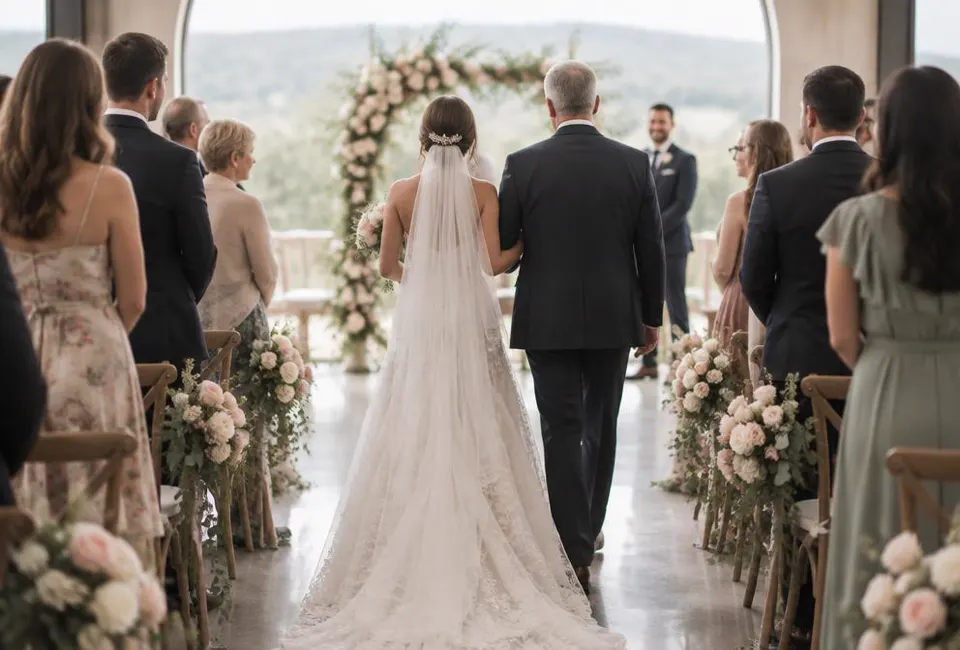
The Universal Four Part Ceremony Framework
Understanding the fundamental wedding ceremony order explained through a four part framework simplifies the planning process for any couple. This structural arc ensures that the transition from individuals to a married unit follows a logical and emotionally resonant progression.
While every couple brings a unique cultural or personal flair to their nuptials, roughly 90 percent of global ceremonies adhere to a singular, foundational rhythm. This structure consists of the Procession, the Declaration, the Exchange, and the Recession. By viewing the wedding as a narrative with a beginning, middle, and end, couples like Elena and Kofi can ensure their ceremony feels complete without getting lost in minor details. The framework acts as a skeleton, providing the necessary support to hold various religious rituals, secular readings, or family traditions in place without the ceremony feeling disorganized or repetitive.
The Universal Four Part Structural Formula
The Procession marks the transition from the ordinary world into the sacred space of the ceremony. It is the physical movement of the wedding party that signals to the guests that the event has officially begun. In diverse settings, from a cathedral to a beach, this entry sets the tone. Following this is the Declaration or the Opening. This is where the officiant welcomes the guests and states the purpose of the gathering. It often includes an 'intent to marry' where the couple publicly confirms their willingness to enter the union, ensuring the legal or spiritual validity of the proceedings before moving forward.
| Stage | Action | Purpose |
|---|---|---|
| Procession | The Arrival | Symbolizes the journey toward the union. |
| Declaration | The Intent | Confirms the purpose and legal/social consent. |
| Exchange | The Promise | The central legal and emotional core of the day. |
| Recession | The Departure | Celebrates the new status as a married couple. |
The third stage, the Exchange, is the heart of the ceremony where the actual marriage occurs. This includes the vows and the ring exchange, or equivalent cultural acts like the tying of the knot or the sharing of wine. For example, a couple like Mateo and Sarah might use this time for personal vows, while others might follow a strict liturgical script. Regardless of the words used, this section represents the moment of transformation. Finally, the Recession is the high energy exit. It is the mirror image of the procession, where the couple leads their guests back out into the world as a newly joined pair.
Universal application of this framework allows couples to bridge different backgrounds seamlessly. If one partner is from a culture emphasizing long communal prayers and the other prefers a brief secular service, the four part formula provides a compromise. You can expand the Declaration to include family blessings or shorten the Exchange to just the legal requirements. By identifying which of the four stages holds the most importance for your specific values, you can allocate your time and budget effectively. This structural clarity helps keep the event focused on the commitment rather than just the logistics of the day.
Initial Framework Planning Steps
- Identify the specific cultural rituals required for your Exchange.
- Determine if the Declaration needs to include a legal 'I do' statement.
- Map out the physical path for the Procession at your venue.
- Decide if the Recession will involve music or guest participation.
- Allocate a specific time limit for each of the four main stages.
- Consult with your officiant to ensure they follow this four part arc.
- Check that your readings fit within the Declaration or Exchange phases.
Ultimately, the wedding ceremony order explained through this framework prevents the 'middle slump' where guests lose focus. By clearly signaling the transition from the Declaration to the Exchange, you pull the audience into the most significant part of the day. For instance, a change in music or a physical shift in where the couple stands can mark these transitions. This roadmap provides the couple with a sense of security, knowing that as long as they move through these four specific pillars, their ceremony will be recognized, respected, and remembered by their global community of friends and family.
The Entry: Processional Variations and Roles
The processional sets the atmospheric tone for the entire event, serving as the formal bridge between the pre-ceremony anticipation and the sacred union. Understanding wedding ceremony order explained requires a careful look at how couples choreograph their entrance to reflect their personal values and family dynamics.
The traditional entrance order typically follows a linear path designed to build anticipation for the final arrival. In many Western settings, the officiant and the first partner enter from the side or walk down the aisle first. This is followed by the wedding party, usually paired or in single file, starting with the furthest bridesmaids and groomsmen and ending with the best man and maid of honor. Flower girls and ring bearers follow immediately before the final entrance. The climax occurs when the second partner enters, traditionally escorted by a father figure. This sequence emphasizes a gradual buildup, focusing the audience attention on the evolving stage before the ultimate reveal.
Breaking Tradition: The Dual Entry and Inclusive Walks
Modern couples increasingly reject the idea of one partner waiting at the altar for the other. A popular alternative is the dual entry, where both individuals enter the ceremony space simultaneously from different points or walk together down the main aisle. This symbolizes a partnership of equals joining their lives by choice. Another growing trend involves the 'family walk,' where each partner is escorted by both parents. This approach acknowledges that the union involves two entire families rather than a transaction between two individuals. These variations allow couples to bypass dated gender roles and create a more equitable start to their marriage.
Amara and David chose a dual entry approach to honor their diverse family structures. Amara wanted to recognize both her mother and her stepfather, while David wished to walk with his parents who had been married for forty years. Instead of a single aisle walk, they utilized two side aisles that met at a central point in the back of the seating area. From there, they each walked with both of their parents down the main center aisle in two distinct waves. This scenario allowed every parent to feel seen and celebrated. It successfully transformed a standard entrance into a profound tribute to their upbringing and heritage.
| Style | Entrance Order | Primary Symbolism | Best For |
|---|---|---|---|
| Traditional Linear | Officiant, Partner A, Party, Partner B | The Grand Reveal | Classic formal events |
| The Simultaneous Dual | Both Partners enter from side aisles | Equality and Union | Modern or secular ceremonies |
| The Parent Escort | Both Partners walk with both parents | Honoring Lineage | Jewish or blended family rituals |
| The Unified Entrance | The Couple walks together | Independence | Elopements or second marriages |
| Circular Entry | Party enters from the back and sides | Community Inclusion | Ceremonies in the round |
When deciding on your order, consider the architectural layout of your venue. A narrow aisle might make a dual parent escort physically difficult, requiring a single file approach instead. You should also coordinate with your photographer to ensure they have clear sightlines for every key participant. If you choose a non traditional path, communicate the plan clearly to your ushers so they can direct guests to keep the pathways clear. The goal is to move from the entrance to the altar with a rhythm that feels intentional. A well planned processional ensures that the transition into the ceremony is smooth and emotionally resonant for everyone present.
Processional Logistics Checklist
- Confirm the specific musical cues for each group of entrants.
- Verify that the aisle width accommodates two or three people walking abreast.
- Assign a dedicated person to fluff the train or veil before the walk.
- Practice the walking pace to ensure it matches the tempo of the music.
- Coordinate the seating of grandparents before the formal processional begins.
- Ensure the officiant is in position before the first note of music plays.
- Check that ring bearers and flower girls know where to stand or sit.
- Establish a signal for the sound technician to start and fade the audio.
- Determine if the wedding party will stand at the altar or sit in the front row.
Errors in the processional often stem from poor spacing. If the wedding party walks too closely together, the photographer cannot capture individual shots, and the moment feels rushed. A good rule of thumb is to wait until the person ahead is halfway down the aisle before the next person starts their walk. This gives each participant their own moment in the spotlight. By focusing on these small details, you ensure that the beginning of your wedding ceremony order explained remains a highlight of the day. Proper pacing and clear roles create a sense of order that settles the nerves of the couple and the guests alike.
The Core: Readings, Vows, and Rings
The middle section of any wedding ceremony order explained serves as the emotional foundation, transitioning from the entry to the formalization of the union. This phase focuses on the spoken word and the physical symbols of commitment through readings, personalized vows, and the exchange of rings.
The core of the ceremony typically begins with readings chosen to reflect the couple’s philosophy. Whether these are religious passages, poetry, or contemporary literature, the goal is to set the tone for the promises that follow. For instance, a couple like Sofia and Liam might select a passage from a favorite novel to illustrate their shared history. When scheduling this segment, limit readings to two selections to ensure the pace remains steady. The transition from these readings to the vows marks the moment where the ceremony shifts from general reflections on love to specific commitments between the two individuals standing at the altar.
Mastering the Vow Exchange Formula
Personalized vows provide the most intimate moment of the day, yet they require careful structure to remain effective. A successful vow follows a three part formula: a shared memory, a set of specific promises, and a vision for the future. For example, Marcus might begin by mentioning the first time he met Elena, followed by five concrete promises regarding support and patience, and ending with his excitement for their life together. To keep the ceremony engaging for guests, each person should aim for a two to three minute window. This duration allows for emotional depth without causing the energy in the room to stagnate.
| Vow Component | Target Duration | Engagement Impact |
|---|---|---|
| Opening Anecdote | 30 to 45 Seconds | High: Hooks the audience |
| Core Promises | 60 to 90 Seconds | Maximum: The legal essence |
| Closing Vision | 30 Seconds | Medium: Provides closure |
| Total Per Person | 120 to 180 Seconds | Optimal: Prevents fatigue |
The ring exchange follows the vows as a physical manifestation of the words spoken. This sequence acts as a seal on the contract just established. The officiant usually prompts the couple to repeat short, declarative sentences while sliding the rings onto the fingers. This is often the most photographed moment of the core section. Common mistakes include rushing the movement or failing to look at one another during the exchange. To avoid this, couples should practice the physical act of placing the ring while maintaining eye contact, ensuring the photographer captures the symbolic weight of the gesture without obstruction from hands or heads.
Scripting the Ring Exchange
- The officiant asks for the rings from the best man or designated attendant.
- The first partner takes the ring and repeats: I give you this ring as a symbol of my love.
- The ring is placed on the fourth finger of the left hand.
- The second partner repeats the process with the corresponding ring.
- The officiant declares the exchange complete, often using a phrase like: By the power of these circles, your lives are now joined.
While global wedding costs vary significantly, with the UK average at approximately £20,600 according to Bridebook 2024 and Australia at A$35,315 per Easy Weddings 2025, the cost of the core ceremony remains minimal compared to the reception. The value here is found in the preparation of the script rather than the expenditure. A well timed vow exchange ensures that the investment made in the venue and decor is supported by a meaningful narrative. Couples who neglect to time their vows often find that the ceremony feels either too brief or uncomfortably long, regardless of the physical setting or the budget allocated for the day.
The Core Ceremony Preparation Tasks
- Select two readings that reflect your shared values.
- Assign readers and provide them with large print scripts.
- Draft vows using the three part formula.
- Time yourself reading vows aloud to hit the 2 to 3 minute mark.
- Print a backup copy of vows for the officiant to hold.
- Confirm who will be holding the rings during the ceremony.
- Decide if you will use traditional or modern ring exchange scripts.
- Coordinate with the photographer on ring exchange positioning.
- Ensure the officiant has a clear cue for the start of the vows.
Finalizing the core section requires a rehearsal of the transitions. The movement from the standing position during readings to the hand holding required for vows should be fluid. When Sarah and David practiced their ceremony, they realized that standing too far apart made the ring exchange look awkward on camera. By adjusting their stance to face each other directly, they created a more intimate atmosphere. This level of detail in the middle of the wedding ceremony order explained ensures that the most important promises are delivered with clarity and poise, leaving a lasting impression on everyone in attendance.
Integrating Traditions: Cultural and Secular Rituals
Customizing the wedding ceremony order explained involves blending time honored heritage rituals with contemporary secular practices to create a personal narrative. These additions serve as visual metaphors for unity, requiring precise placement to maintain the flow of the event.
Integrating cultural rituals requires a balance between honoring heritage and keeping the audience engaged. For instance, a Chinese tea ceremony traditionally involves the couple serving tea to parents and elders as a sign of respect and gratitude. While often a standalone event, many modern couples incorporate a condensed version during the ceremony. To avoid stalling the momentum, this ritual should occur after the welcome but before the exchange of vows. This timing ensures the act of honoring the past leads naturally into the promises for the future. For example, Elena and Wei might choose to seat their parents at the front for a three minute tea presentation immediately following the opening remarks.
Secular Rituals: Symbols of Conjoined Lives
Unity rituals such as sand pouring, candle lighting, or handfasting provide a physical manifestation of two lives becoming one. The most effective placement for these acts is usually between the exchange of rings and the final blessing. If the ritual is placed before the vows, it can feel like a premature conclusion. If it happens after the declaration of marriage, it delays the excitement of the recessional. Consider Sarah and Jamie, who chose a handfasting ceremony. By having the officiant bind their hands just as they prepared to say their final vows, the physical connection reinforced the weight of their spoken words without breaking the established rhythm.
| Ritual Type | Best Placement | Estimated Duration | Key Requirement |
|---|---|---|---|
| Handfasting | Immediately before or during vows | 2 to 4 minutes | Pre knotted cords |
| Unity Candle | After ring exchange | 3 minutes | Draft protection |
| Tea Ceremony | After the opening address | 5 to 8 minutes | Pre poured cups |
| Sand Blending | After rings, before blessing | 2 to 3 minutes | Stable table surface |
| Breaking the Glass | End of ceremony | 1 minute | Wrapped glass piece |
The logistics of these rituals often dictate their success more than the words spoken. If a ritual requires specific props, such as a table for sand vials or a lighter for a candle, these items must be pre positioned. A common mistake is for the couple to turn their backs to the guests for an extended period. To avoid this, the officiant should continue speaking, explaining the significance of the ritual while the couple performs the action. This keeps the guests connected to the moment. If the ceremony involves a larger group, like a Lasso ceremony common in Hispanic cultures, ensure the sponsors are briefed on exactly when to approach and where to stand.
When choosing which rituals to include, focus on quality over quantity. Overloading the ceremony with three or four different traditions can make the wedding ceremony order explained feel disjointed and overly long. Select one or two that carry the deepest personal meaning. For a multicultural couple like Amara and Leo, combining a Jumping the Broom tradition at the very end with a Western ring exchange creates a cohesive story of their backgrounds. The goal is to ensure each element feels like a necessary building block of the union rather than a theatrical distraction that pulls focus away from the emotional core.
Logistical Prep for Unity Rituals
- Confirm who will bring the ritual items to the venue.
- Check for wind or drafts if using open flames.
- Practice the physical movements during the rehearsal.
- Ensure the photographer has a clear line of sight.
- Assign a bridesmaid or groomsman to remove props afterward.
- Verify if the officiant needs a script for the explanation.
- Prepare a cleanup kit for spills of sand, water, or wine.
- Check venue rules regarding fire or organic materials like rice.
Scripting Success: Cues for the Officiant
The officiant acts as the conductor of the wedding ceremony order explained, ensuring every transition feels intentional and every guest feels included. Effective scripting requires precise verbal cues that guide the flow while anchoring the emotional weight of the union.
Precise verbal cues are the foundation of a polished ceremony. The officiant must act as a narrator who guides the guests through their required movements without causing confusion. For example, when the processional concludes, the officiant should wait until the couple is centered before saying, Please be seated. Failure to give this cue often results in guests standing awkwardly for several minutes, which detracts from the opening remarks. Clear instructions ensure that the focus remains on the couple rather than on the logistics of the seating arrangements.
Mastering the Charge and Declaration
The Charge to the Couple is a pivotal moment where the officiant addresses the gravity of the commitment. Consider a couple like Sarah and David who want a secular but serious tone. The officiant might say: Sarah and David, you stand here today to enter into a new life together. This is a deliberate choice to support one another through all seasons. Following this is the Declaration of Intent, which is the legal or formal I do moment. The officiant must ask each party clearly: Do you take this person to be your spouse? This is distinct from the vows and serves as the public confirmation of consent.
| Ceremony Phase | Action Required | Recommended Scripting | Timing |
|---|---|---|---|
| Processional Start | Guests Stand | Please rise for the arrival of the couple. | As the music changes |
| Welcome | Guests Sit | You may all be seated. | Once the couple is joined |
| Vow Exchange | Focus Shift | I invite you to turn and face one another. | After the readings |
| Pronouncement | Celebration | It is my honor to present the married couple. | After the final kiss |
| Recessional | Exit Start | Please remain standing as the couple departs. | As the exit music begins |
Officiants must also manage the logistical transitions between rituals. If a couple like Hiroshi and Elena incorporates a handfasting or a candle lighting, the officiant should explain the significance briefly while the couple prepares their hands or the tools. A common mistake is allowing dead air while the couple struggles with a knot or a lighter. The script should include filler text that reinforces the theme of the wedding ceremony order explained, ensuring that the momentum does not stall during these tactile movements.
The final cues involve the transition to the reception. The officiant is often responsible for directing the crowd to the next location. Instead of a generic announcement, the script should be specific: Please join the newlyweds on the terrace for refreshments. This prevents the bottleneck effect where guests linger in the ceremony space, unsure of where to go. By providing these final instructions, the officiant completes their role as the event guide, allowing the couple to enjoy their first moments of marriage without managing the crowd themselves.
Officiant Scripting Essentials
- Ask guests to silence mobile devices before the start.
- Include a formal welcome to all attendees and family.
- Direct the couple to join hands for the vows.
- Ensure the Declaration of Intent uses the couple's full names.
- Explicitly state the 'I do' prompt for both individuals.
- Provide a clear cue for the first kiss.
- Announce the couple's new shared name or titles.
- Give specific directions for the post-ceremony cocktail hour.
The Exit: Recessional Order and Coordination
The recessional marks the high point of the wedding ceremony order explained, transitioning the high emotion of the vows into a celebratory atmosphere. Proper coordination ensures a smooth flow of traffic as guests shift from the ceremony site to the reception or cocktail hour.
Once the officiant pronounces the marriage, the couple leads the departure to an upbeat musical track. The order of the exit is generally the reverse of the entrance, though logistics dictate a faster pace. The couple exits first, followed by the wedding party in pairs or single file. If there are children involved, they follow the attendants. Finally, the parents and immediate family members exit from their front row seats. This sequence creates a clear path for the photographer to capture the joy of the couple without other guests blocking the frame or causing congestion in the aisle.
Strategies for Guest Flow and Direction
A common mistake in the wedding ceremony order explained is failing to direct guests after the family has exited. Without a cue, guests often linger in the aisles, creating a bottleneck. Consider the scenario of Elena and Marcus, who married in a tight garden space. Instead of a general exit, their officiant announced the location of the cocktail hour and asked guests to remain seated until the parents reached the back. This simple script prevents the chaotic 'rush the aisle' effect and ensures that elderly guests or those with mobility aids are not jostled during the transition.
| Participant | Action Cue | Target Destination |
|---|---|---|
| The Couple | The Kiss and Announcement | Private 'Holding Room' |
| Wedding Party | Couple reaches mid-aisle | Designated photo lineup |
| Parents/Family | Last attendant exits | Greeting line or transport |
| General Guests | Officiant verbal dismissal | Cocktail hour location |
| Officiant | Aisle is clear of guests | Sign legal documents |
Post-ceremony rituals often happen immediately following the exit. For instance, if you are incorporating a confetti toss or petal shower, ensure the logistics are explained to guests before the recessional begins. Assign two ushers to distribute items 10 minutes prior to the end. In the case of a traditional Greek wedding, the couple might wait at the door to receive well wishes. However, if the guest count exceeds 100, this can cause a 30 minute delay. In these cases, it is more efficient to move the couple to a second location to avoid blocking the exit path.
Logistics also depend on your chosen venue and global budget considerations. According to The Knot Real Weddings Study 2025, the US average cost for a wedding is about $33,000, while Easy Weddings 2025 notes the Australian average is A$35,315. High investment in professional coordination can help manage these transitions. If you lack a coordinator, the officiant must take the lead. They should stay at the front until the couple is out of sight, providing a visual anchor. This prevents guests from standing up too early and ensures the photographer gets clean shots of the wedding party departure.
Final Recessional Coordination Checklist
- Confirm music starts exactly on the kiss or announcement.
- Ensure the 'holding room' for the couple is unlocked and stocked.
- Instruct ushers on when to begin row by row dismissal if planned.
- Check that the path from the aisle to the next area is clear of decor.
- Coordinate with the photographer to ensure they move backward safely.
- Brief the officiant on the specific dismissal script for guests.
- Verify transportation is idling if the reception is at a new site.
- Designate one person to collect leftover programs or personal items.
- Alert the wedding party of their specific photo lineup location.
Finally, the transition to the next location should be effortless for the attendees. Use clear signage at the exit of the ceremony space. If guests need to drive to a second location, provide printed cards with the address or a QR code for digital maps. For a seamless flow, about 80 percent of the coordination should happen before the music even starts. By defining exactly who moves when and where they should go, you avoid the awkward standing around that often plagues the moments immediately following a beautiful ceremony.
Avoidance Strategy: Common Sequencing Mistakes
The final phase of wedding ceremony order explained focuses on preventing technical and logistical failures that can disrupt even the most carefully scripted sequence. Understanding these pitfalls ensures the transition between rituals remains fluid and emotionally resonant for the couple and their guests.
Correcting Audio and Announcement Failures
Poor microphone placement frequently ruins the auditory experience for guests. In a scenario where Sarah and Liam stand facing each other, a single microphone on a stationary stand often fails to pick up their whispers. The common mistake is neglecting to have the officiant hold the microphone or failing to use clip on lapel mics. If the officiant holds the device, they must remember to move it back and forth between the couple. Without this coordination, the vows, which are the emotional core of the day, become inaudible to everyone beyond the first two rows.
Neglecting the unplugged ceremony announcement before the processional begins is a sequencing error that leads to a sea of glowing screens in professional photos. This announcement must happen while guests are seated but before the music starts. If the officiant waits until the bride or groom is walking down the aisle, the moment is already lost. A clear script for this would be: Please silence all devices and refrain from taking photos until the recessional, as the couple wishes for you to be fully present with them today.
Another frequent error involves the transition between the exchange of rings and the final blessing. Couples often forget to discuss the handoff of the bouquet. For example, if Elena holds her flowers through the entire ring exchange, she struggles to use her hands effectively. The mistake here is not scripting the exact moment the maid of honor steps forward to take the bouquet. This should happen immediately after the processional ends, ensuring the couple's hands are free for the duration of the core rituals.
| Mistake | Impact | Correction Strategy |
|---|---|---|
| Late Unplugged Notice | Obstructed photos | Announce 5 minutes before music |
| Static Mic Placement | Inaudible vows | Use lapel mics or roaming officiant |
| Long Transitions | Loss of guest focus | Limit instrumental cues to 90 seconds |
| Forgotten Ring Box | Ceremony halt | Best man check 2 minutes before start |
| Rushed Recessional | Crowding at the exit | Pause for 5 seconds before walking |
Finally, the lack of a clear cue for guests to stand or sit creates a wave of confusion. When the processional begins, the officiant must verbally invite the guests to rise if the music choice is not traditional enough to signal the movement. Similarly, once the couple reaches the altar, the officiant should explicitly tell the guests to be seated. Failing to provide these verbal anchors leaves half the audience standing while the other half sits, creating a visual disconnect that distracts from the opening remarks.
Final Sequence Verification Tasks
- Confirm the officiant has the unplugged announcement script.
- Test microphone levels for both the officiant and the couple.
- Assign a specific person to collect the bouquet before vows.
- Coordinate the fade out points for all transition music.
- Verify the rings are in the possession of the designated attendant.
- Walk through the standing and sitting cues with the officiant.
- Ensure the marriage license is present for the signing ritual.
- Double check the battery levels on all wireless audio equipment.